
Contents
Overview
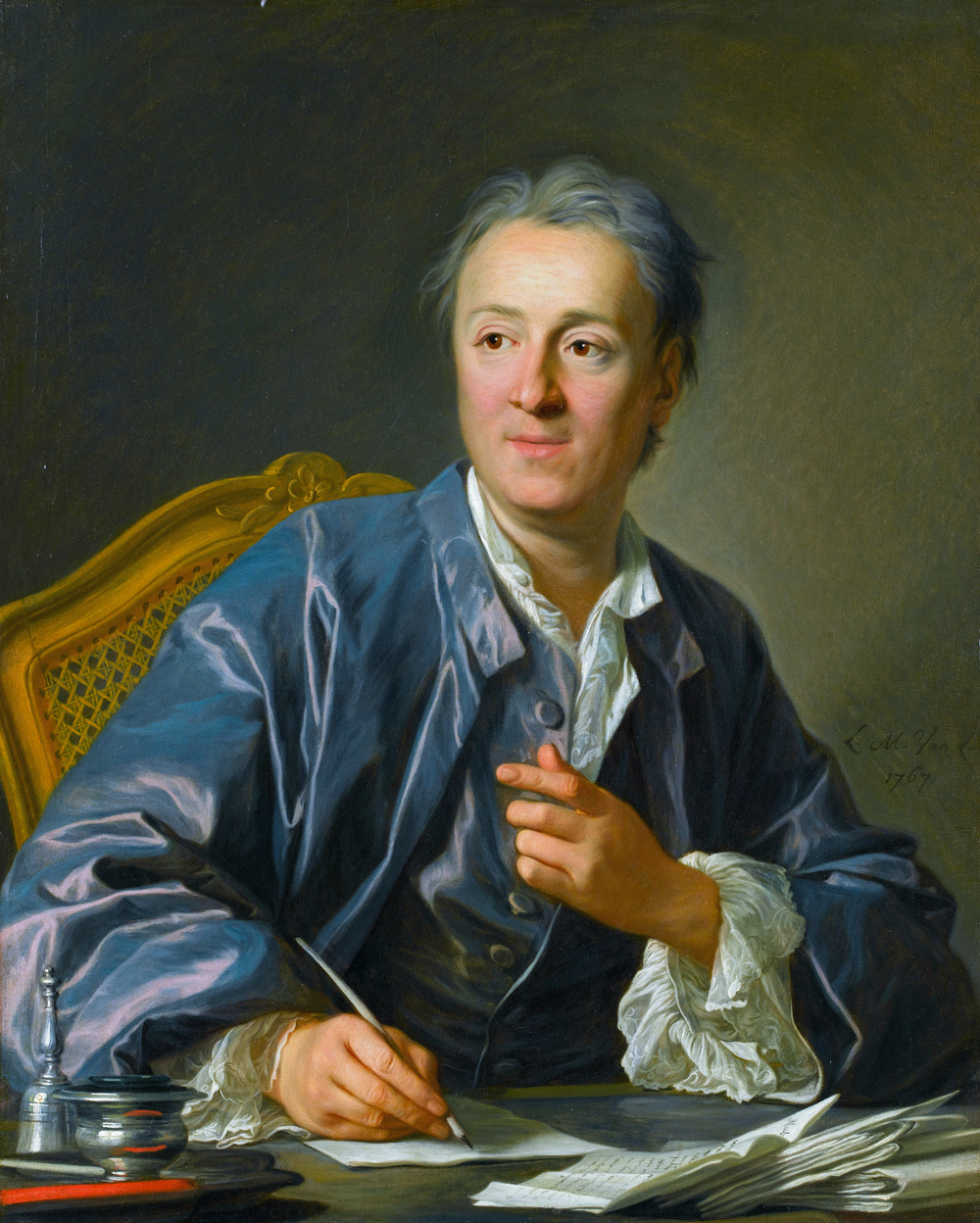
Born in Langres, France, Denis Diderot’s early life was marked by a rigorous education, first at the Jesuit college in Langres and later at the University of Paris. Initially destined for the clergy, he later pursued legal studies, but his true passion lay in literature and philosophy. By the 1730s, he had formally decided to become a writer, a decision that led to estrangement from his father, Didier Diderot. For the next decade, Diderot lived a bohemian existence, immersing himself in intellectual circles and honing his craft through translation and early essays. This period of intellectual ferment laid the groundwork for his later, more ambitious projects, including his early philosophical novels like Les Bijoux indiscrets (published 1748), which already hinted at his willingness to challenge societal norms and explore controversial ideas.
⚙️ The Encyclopédie Project
Diderot's most enduring achievement is undoubtedly his co-founding and chief editorship of the Encyclopédie, ou dictionnaire raisonné des sciences, des arts et des métiers. Launched in 1751 with Jean le Rond d'Alembert, who served as a co-editor, this ambitious project aimed to compile all human knowledge, presenting it through the lens of reason and empirical observation. Over two decades, Diderot meticulously curated and edited entries from hundreds of contributors, including luminaries like Jean-Jacques Rousseau and Voltaire. The Encyclopédie was revolutionary not only for its scope but also for its inclusion of articles on mechanical arts and its secular, often skeptical, tone regarding religious dogma, which drew the ire of the Catholic Church and the French monarchy. The sheer scale of the project represented an unprecedented collaborative effort in intellectual history.
✍️ Literary and Philosophical Works
Beyond his editorial magnum opus, Diderot was a prolific and versatile writer. His philosophical novels, such as La Religieuse (The Nun) and Jacques le fataliste (Jacques the Fatalist), explored complex themes of free will, determinism, and social critique with innovative narrative structures and dialogues. His dramatic works, like Le Fils naturel (1757), experimented with the concept of the 'fourth wall' in theatre, aiming for greater realism. Diderot’s writings often challenged conventional morality and religious belief, employing irony and satire to probe the human condition and the limitations of established institutions. His essays, including Pensées sur l'interprétation de la nature (1750), articulated his commitment to scientific methodology and empirical investigation.
🎨 Art Criticism and Aesthetics
Diderot was also a pioneering art critic, arguably creating the genre with his Salons, reviews of the Parisian art exhibitions held at the Louvre. His writings on art, particularly those from the 1750s and 1760s, offered insightful commentary on the works of painters like Jean-Honoré Fragonard and Jean-Baptiste-Siméon Chardin. He moved beyond mere description to analyze composition, color, and emotional impact, advocating for art that was both aesthetically pleasing and morally instructive. Diderot’s aesthetic theories emphasized the importance of nature as a source of inspiration and the artist's role in capturing the dynamism and sensuality of life, influencing subsequent generations of art historians and critics.
🌍 Enlightenment Context
Diderot was a central figure in the Age of Enlightenment, a period characterized by a profound belief in reason, individualism, and scientific progress. He moved in intellectual circles that included Jean-Jacques Rousseau, Voltaire, and Montesquieu, engaging in debates that would shape modern Western philosophy and political thought. The Enlightenment’s emphasis on challenging traditional authority, whether religious or monarchical, found a potent voice in Diderot’s work and, most significantly, in the pages of the Encyclopédie. His commitment to disseminating knowledge widely was a hallmark of the era’s intellectual ambition to enlighten the public and foster critical thinking across society.
⚡ Censorship and Persecution
The radical nature of the Encyclopédie and Diderot's own writings did not go unnoticed by the authorities. Both he and his collaborators faced significant opposition, including censorship, book burnings, and even imprisonment. The Encyclopédie itself was suppressed multiple times by the Parlement of Paris and the King's Council. Despite these pressures, Diderot, with the support of patrons like Madame de Pompadour and later Catherine the Great of Russia, persevered, ensuring the completion and distribution of the monumental work, demonstrating remarkable resilience in the face of state opposition.
💡 Diderot's Philosophical Stance
Diderot’s philosophical outlook was complex and evolved throughout his life, but he is often associated with a form of philosophical materialism and determinism. He questioned traditional notions of a divine creator and an immortal soul, instead emphasizing the importance of empirical observation and sensory experience. His writings, such as D'Alembert's Dream, explored the possibility of life arising spontaneously from matter and questioned the boundaries between animate and inanimate. While not an atheist in the modern sense, Diderot was deeply skeptical of organized religion and advocated for a morality grounded in human reason and social utility rather than divine command. His embrace of scientific inquiry and his willingness to entertain challenging hypotheses positioned him as a radical thinker within his era.
🔮 Legacy and Influence
Denis Diderot's influence on subsequent intellectual and cultural history is profound. The Encyclopédie served as a model for future encyclopedic endeavors and remains a crucial historical document of the Enlightenment's intellectual landscape. His philosophical ideas, particularly his materialism and his exploration of human consciousness, foreshadowed later developments in philosophy and psychology. As an art critic, he established a framework for analyzing and appreciating visual art that continues to resonate. Furthermore, his literary innovations in novels and drama influenced narrative techniques and theatrical realism. The very spirit of critical inquiry and the pursuit of comprehensive knowledge that he embodied remains a vital force in academia and public discourse today.
🤔 Controversies and Debates
Despite his monumental contributions, Diderot’s work and ideas were not without controversy. His secular and often skeptical tone in the Encyclopédie led to accusations of atheism and subversion from religious and political authorities, resulting in censorship and persecution. His philosophical explorations of materialism and determinism challenged deeply held religious and metaphysical beliefs, sparking debates that continued long after his death. Some critics have pointed to perceived inconsistencies in his thought or questioned the extent to which his personal beliefs were fully represented in the Encyclopédie due to the need for discretion. The posthumous publication of many of his most daring works, like La Religieuse and Jacques le fataliste, highlights the risks associated with his intellectual honesty.
Key Facts
- Category
- philosophy
- Type
- topic