
Contents
Overview
The story of cloves begins in the lush volcanic islands of the Maluku archipelago, known historically as the Spice Islands, where Syzygium aromaticum trees have thrived for centuries. Archaeological evidence suggests cloves were traded as far back as the 3rd century BCE, reaching China and later the Roman Empire, where they were valued for both their culinary and medicinal properties. The Arabian traders maintained a near-monopoly on the clove trade for centuries, meticulously guarding the source of this precious spice. This secrecy fueled European exploration, with Portuguese explorer Vasco da Gama famously reaching the Moluccas in 1511, marking the beginning of intense colonial competition for control over the spice trade, involving powers like the Dutch East India Company (VOC) and later the British. The Dutch, in particular, ruthlessly enforced their monopoly, even going so far as to destroy trees on islands they didn't control to keep prices artificially high, a stark illustration of the economic power wielded by this tiny spice.
⚙️ How It Works
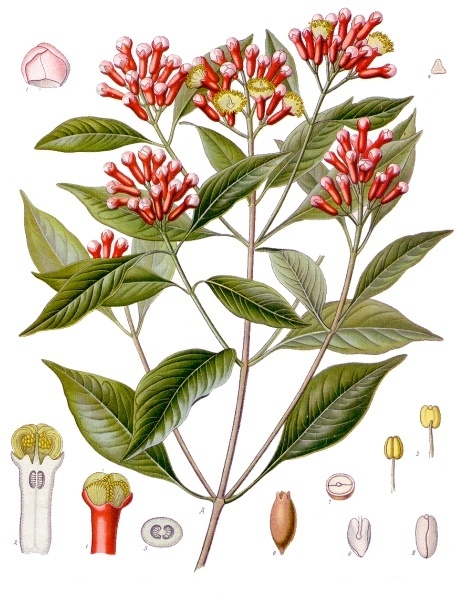
Cloves are harvested from the Syzygium aromaticum tree, a member of the Myrtaceae family, which also includes guavas and eucalyptus. The flower buds are hand-picked just before they open, when their color changes from green to a bright red. This precise timing is crucial for optimal flavor and aroma. After harvesting, the buds are dried in the sun or by artificial means, causing them to turn a dark brown and shrink. The characteristic aroma and flavor are primarily due to eugenol, an aromatic compound that makes up 70-85% of the essential oil extracted from cloves. This oil can be obtained through steam distillation and is a potent source of the spice's distinctive qualities, as well as its various medicinal and industrial applications. The quality of cloves is often judged by their oil content and the presence of stems or other foreign matter.
📊 Key Facts & Numbers
Globally, the production of cloves is dominated by Indonesia, which accounts for approximately 75% of the world's supply, harvesting an estimated 130,000 to 150,000 metric tons annually. Madagascar, Tanzania, Sri Lanka, and Comoros are other significant producers, each contributing to the diverse global market. The global market for cloves is valued at over $600 million USD, with demand driven by the food and beverage industry (around 70%), followed by the fragrance and flavor sectors (about 20%), and pharmaceuticals and traditional medicine (around 10%). High-quality cloves can fetch prices upwards of $10 to $20 per pound, though market fluctuations and crop yields can significantly impact these figures. Indonesia's primary production region, the Moluccas, produces an average of 10,000 to 15,000 tons per year, highlighting the sheer scale of this spice's economic importance.
👥 Key People & Organizations
Historically, the spice trade was driven by powerful entities like the Arabian traders and later the Dutch East India Company (VOC), which fiercely controlled production and distribution for centuries, often through brutal means. In modern times, key organizations involved in the clove trade include the Indonesian Spice Association and various agricultural cooperatives in producing nations. Prominent figures in the history of clove cultivation and trade include Vasco da Gama, whose voyages opened the door for European access, and Jan Pieterszoon Coen, a VOC governor who enforced harsh policies to maintain Dutch dominance. Today, researchers like Dr. David John of the Royal Botanic Gardens, Kew continue to study the genetic diversity and sustainable cultivation of Syzygium aromaticum.
🌍 Cultural Impact & Influence
Cloves have profoundly shaped global cuisine, becoming an indispensable ingredient in dishes ranging from Indian curries and Indonesian rendang to European mulled wines and American baked goods. Their aromatic profile is central to spice blends like garam masala and pumpkin pie spice. Beyond the kitchen, cloves have influenced the fragrance industry, lending their warm, spicy notes to perfumes and colognes, and are a staple in traditional Chinese medicine and Ayurvedic practices for their purported health benefits. The intense aroma has also led to their use in incense and potpourri, embedding them in cultural rituals and domestic environments worldwide. Their historical value even led to conflicts, such as the Dutch efforts to monopolize the spice, demonstrating their significant economic and geopolitical leverage.
⚡ Current State & Latest Developments
The current global clove market is experiencing steady growth, projected to reach over $800 million USD by 2027, driven by increasing demand in emerging economies and a growing consumer interest in natural flavors and traditional remedies. Indonesia continues to be the dominant producer, though challenges remain regarding price volatility and the impact of climate change on crop yields. Efforts are underway to promote sustainable farming practices and fair trade certifications to ensure better livelihoods for smallholder farmers, who produce the majority of the world's cloves. Innovations in extraction techniques are also enhancing the efficiency of producing clove oil for pharmaceutical and cosmetic applications, further diversifying its market reach. The ongoing research into eugenol's properties continues to uncover new potential applications, keeping cloves relevant in scientific and industrial spheres.
🤔 Controversies & Debates
The history of cloves is rife with controversy, most notably the Dutch East India Company's brutal enforcement of their monopoly in the 17th and 18th centuries, which involved the destruction of trees and severe punishment for unauthorized cultivation. This period saw widespread human rights abuses and the near-eradulteration of clove trees from certain islands to maintain inflated prices. Today, debates persist regarding fair trade practices and ensuring that smallholder farmers in countries like Indonesia and Madagascar receive equitable compensation for their labor. Concerns also arise about the environmental impact of monoculture farming and the potential for pesticide use to affect the quality and safety of the final product. Furthermore, the medicinal claims associated with cloves are sometimes debated, with ongoing scientific scrutiny to validate traditional uses.
🔮 Future Outlook & Predictions
The future of cloves appears robust, with continued demand expected from the food, fragrance, and pharmaceutical sectors. Research into the therapeutic properties of eugenol, particularly its antimicrobial, anti-inflammatory, and analgesic effects, could lead to new pharmaceutical applications and a greater role in natural health products. Efforts to diversify production beyond the traditional Maluku Islands and to implement climate-resilient farming techniques will be crucial for long-term supply stability. The development of novel extraction and formulation methods may also unlock new industrial uses for clove derivatives. As consumers increasingly seek natural and ethically sourced ingredients, certified sustainable cloves could see a significant market premium, potentially reshaping the economic landscape for growers and traders alike.
💡 Practical Applications
Cloves are incredibly versatile, finding application across numerous industries. In the culinary world, they are a cornerstone of spice blends like garam masala, Chinese five-spice, and pumpkin pie spice, and are used to flavor baked goods, meats, and beverages like mulled wine. Their essential oil, rich in eugenol, is widely used in the fragrance industry for perfumes, soaps, and cosmetics, and as a flavoring agent in candies and chewing gum. Medicinally, clove oil has been employed as a natural antiseptic, analgesic for toothaches (due to eugenol's numbing effect), and digestive aid in traditional medicine systems like Ayurveda and Traditional Chinese Medicine. Industrially, eugenol extracted from cloves can be used in the production of vanillin, plastics, and as a component in some dental materials.
Key Facts
- Category
- nature
- Type
- topic