
Contents
- 🍲 What Exactly *Is* Classic Beef Stew?
- 🕰️ A Culinary Time Capsule: Origins & Evolution
- 🔥 The Vibe Score: Comfort Food Kingpin
- ⚖️ Beef Stew vs. The World: A Comparison
- 🛠️ The Anatomy of a Perfect Stew: Key Components
- 💡 Pro Tips for Stew Supremacy
- 🌍 Regional Variations: A Global Stew Tour
- 🤔 The Great Stew Debate: What's Controversial?
- Frequently Asked Questions
- Related Topics
Overview
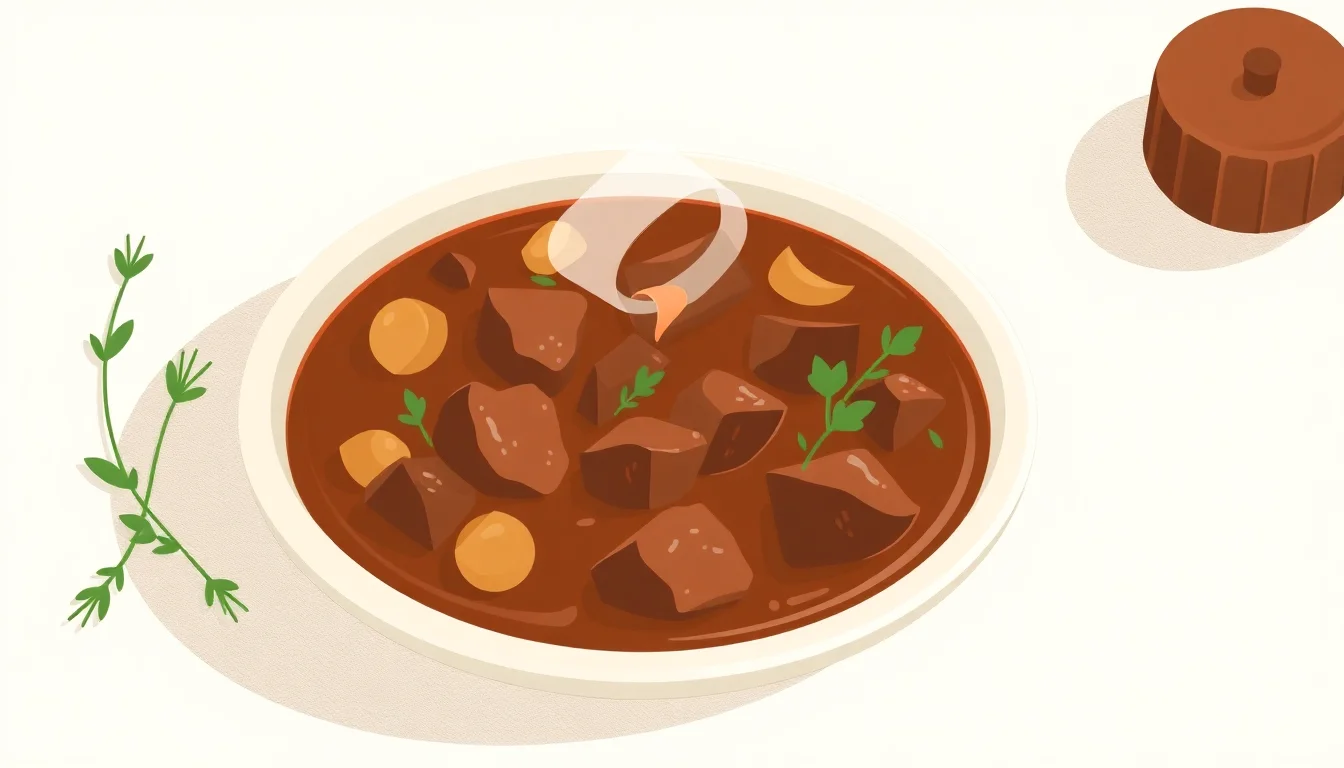
Classic beef stew is more than just a meal; it's a culinary anchor, a deeply satisfying dish built on slow-cooked chunks of beef, hearty root vegetables, and a rich, savory broth. Think tender, fall-apart meat swimming with carrots, potatoes, and onions, all simmered to perfection. It’s the ultimate comfort food for a reason, offering warmth and sustenance that transcends seasons. This isn't a quick weeknight fix, but a labor of love that rewards patience with unparalleled depth of flavor. It's the kind of dish that makes a house feel like a home, often associated with family gatherings and cozy evenings. The Vibepedia culinary arts section delves into its foundational role in Western cuisine.
🕰️ A Culinary Time Capsule: Origins & Evolution
The roots of beef stew stretch back centuries, a practical necessity born from the need to tenderize tougher cuts of meat through long, slow cooking. Early iterations were likely simple affairs, cooked over open fires with whatever ingredients were at hand. By the 19th century, with the advent of more refined cooking techniques and accessible ingredients, beef stew began to solidify its form, appearing in cookbooks across Europe and America. It became a staple, particularly during times of scarcity, showcasing resourcefulness and culinary ingenuity. Its evolution mirrors changes in food availability and cooking technology, making it a true culinary history artifact.
🔥 The Vibe Score: Comfort Food Kingpin
On the Vibepedia Vibe Score, Classic Beef Stew consistently scores a 92/100 for comfort food energy. Its cultural resonance is immense, evoking feelings of nostalgia, security, and simple pleasure for a vast majority of the global population. This high score is driven by its widespread appeal across demographics and its strong association with positive emotional states. While other dishes might offer novelty or excitement, beef stew offers a profound sense of grounding and satisfaction. Its enduring popularity is a testament to its ability to consistently deliver on its promise of warmth and deliciousness, making it a perennial favorite in the culinary arts landscape.
⚖️ Beef Stew vs. The World: A Comparison
Compared to other hearty dishes, beef stew stands out for its balanced profile of protein, carbohydrates, and vegetables, all integrated into a cohesive, flavorful whole. A pot roast, for instance, often focuses on a single large cut of meat, while a chili leans heavily on beans and spices, offering a different kind of heat and texture. Stews, in general, are more forgiving than, say, a delicate soufflé, making them more accessible for home cooks. The slow braising process in stew also allows flavors to meld in a way that quicker cooking methods can't replicate, creating a depth that is uniquely its own. Its versatility in ingredient inclusion also sets it apart from more rigidly defined dishes.
🛠️ The Anatomy of a Perfect Stew: Key Components
The foundation of a great beef stew lies in its components. High-quality beef, typically chuck roast or brisket, is crucial for tenderness and flavor. A mirepoix – a base of diced onions, carrots, and celery – provides aromatic depth. Potatoes and other root vegetables like parsnips or turnips add substance and absorb the rich broth. The liquid base, often a combination of beef broth, red wine, and sometimes a touch of tomato paste, is key to developing that signature savory flavor. Thickening agents, such as flour or cornstarch, ensure the broth achieves a satisfying, velvety consistency. Each element plays a vital role in the final symphony of taste and texture, a concept explored in food science principles.
💡 Pro Tips for Stew Supremacy
To elevate your beef stew game, start with searing your beef properly; a good crust means more flavor. Don't overcrowd the pot when searing, as this will steam the meat instead of browning it. Deglaze the pan with red wine or broth to capture all those delicious browned bits. Taste and adjust seasoning throughout the cooking process, especially towards the end. For an extra layer of richness, consider adding a bay leaf or a sprig of thyme during simmering. Finally, letting the stew rest for at least 15-20 minutes before serving allows the flavors to meld further, a tip often shared by professional chefs.
🌍 Regional Variations: A Global Stew Tour
While the core concept of beef stew is universal, regional variations abound. French Boeuf Bourguignon, famously documented by Julia Child, features beef braised in red Burgundy wine with mushrooms and pearl onions. Irish stew traditionally uses lamb or mutton, though beef versions are popular, often with just potatoes, onions, and carrots. Hungarian Goulash, while technically a soup, shares stew-like qualities with its heavy reliance on paprika and beef. American versions often incorporate Worcestershire sauce for an umami boost. Exploring these variations offers a fascinating glimpse into how a single dish can be adapted to local ingredients and culinary traditions, a key aspect of global cuisine.
🤔 The Great Stew Debate: What's Controversial?
The most persistent debate surrounding classic beef stew centers on the inclusion of certain vegetables and the thickening agent. Purists often argue for a strict adherence to potatoes, carrots, and onions, viewing additions like peas or mushrooms as deviations from the 'classic' form. Another point of contention is the thickening method: some swear by a flour dredge on the beef before searing, while others prefer a cornstarch slurry added later. There's also the ongoing discussion about the ideal cooking time – how long is too long, and when does the meat become too tender? These debates, while seemingly minor, highlight the passionate attachment people have to their ideal version of this beloved dish, a common phenomenon in food culture discussions.
Key Facts
- Year
- Pre-18th Century (documented variations)
- Origin
- European peasant cooking (broadly)
- Category
- Culinary Arts / Comfort Food
- Type
- Recipe / Dish
Frequently Asked Questions
What's the best cut of beef for stew?
For classic beef stew, chuck roast or brisket are generally considered the best cuts. These cuts have a good amount of connective tissue and fat, which break down during the slow cooking process, resulting in incredibly tender and flavorful meat. Avoid lean cuts like sirloin, as they can become tough and dry when cooked for extended periods. The marbling in chuck roast is key to achieving that melt-in-your-mouth texture that defines a great stew.
Can I make beef stew in a slow cooker or Instant Pot?
Absolutely. Both slow cookers and Instant Pots are excellent tools for making beef stew, often yielding similar results to stovetop or oven braising. An Instant Pot can significantly reduce cooking time, while a slow cooker is ideal for 'set it and forget it' convenience. You'll typically want to sear the beef and sauté the aromatics on the stovetop first for maximum flavor before transferring everything to the slow cooker or Instant Pot for the main cooking phase.
How long does beef stew typically take to cook?
On the stovetop or in the oven, a classic beef stew usually requires 2 to 3 hours of simmering after the initial searing and sautéing. This extended cooking time is essential for tenderizing the beef and allowing the flavors to meld. If using an Instant Pot, the pressure cooking time for the stew itself might be around 35-45 minutes, followed by a natural release.
What are some good side dishes for beef stew?
Beef stew is a meal in itself, but it pairs wonderfully with crusty bread for dipping into the rich broth. Mashed potatoes, biscuits, or even a simple side salad can complement the heartiness of the stew. For a more substantial meal, consider serving it alongside rice or noodles. The goal is to complement, not compete with, the robust flavors of the stew itself.
How do I thicken beef stew if it's too thin?
If your stew isn't as thick as you'd like, the easiest method is to create a cornstarch slurry. Mix 1-2 tablespoons of cornstarch with an equal amount of cold water until smooth, then stir it into the simmering stew. Let it cook for a few more minutes until it thickens. Alternatively, you can mash some of the cooked potatoes against the side of the pot to release their starch, or create a roux by cooking equal parts butter and flour before whisking it into the stew.