
Contents
Overview
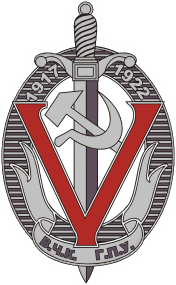
The Cheka emerged from the crucible of the Russian Revolution. Its stated purpose was to defend the nascent Soviet state against sabotage, counter-revolution, and internal enemies. Early precursors to its brutal methods can be traced to the revolutionary tribunals and committees that emerged during the tumultuous period of 1917. The Cheka's operational headquarters were established in Saint Petersburg, marking its central role in the Bolsheviks' consolidation of power. Its existence was formally recognized as a critical component of state security, laying the groundwork for future Soviet security apparatuses.
⚙️ How It Works
The Cheka operated with near-absolute authority, functioning as an investigative body, a judicial tribunal, and an executioner all in one. Its primary functions included counter-intelligence, rooting out political dissent, and maintaining loyalty within the Red Army. It established a vast network of informants and agents across Russia, enabling widespread surveillance and the swift apprehension of perceived enemies. The Cheka's investigative techniques often involved brutal torture to extract confessions, further cementing its reputation for ruthlessness.
📊 Key Facts & Numbers
By the end of the Russian Civil War, the Cheka commanded a formidable force. The scale of its operations is further illustrated by the fact that it controlled a significant portion of the Soviet budget dedicated to security and internal affairs.
👥 Key People & Organizations
The Cheka's most prominent figure was its founder and long-time chairman, Felix Dzerzhinsky, a Polish revolutionary known for his unyielding dedication to the Bolshevik cause and his iron will. Other key figures included Moisei Urusov and Ivan Karpinsky, who served in various leadership capacities within the organization, implementing Dzerzhinsky's directives. The Bolshevik Party itself served as the ultimate guiding and controlling organization for the Cheka's operations.
🌍 Cultural Impact & Influence
The Cheka's legacy is deeply embedded in the historical consciousness of the 20th century, serving as a chilling precursor to subsequent Soviet security agencies like the KGB. Its methods and organizational structure influenced the development of secret police forces worldwide, both as a model for authoritarian regimes and as a cautionary tale. The term 'Chekist' became a byword for a secret police agent, carrying connotations of ruthlessness and unwavering loyalty to the state. The pervasive fear it instilled contributed significantly to the consolidation of Bolshevik power and the suppression of any organized opposition, shaping the political landscape of the Soviet Union for decades.
⚡ Current State & Latest Developments
The Cheka's functions and personnel were largely absorbed into its successor, the State Political Directorate (GPU), which later evolved into the NKVD and eventually the KGB. The principles of state surveillance, political repression, and the use of secret police as an instrument of control, however, continued to permeate Soviet governance. The historical memory of the Cheka remains a potent symbol of state-sponsored terror and remains a subject of intense historical debate and analysis regarding its role in the Soviet Union's formation and its human rights record.
🤔 Controversies & Debates
The Cheka is one of the most controversial institutions in modern history. The Cheka's brutal methods were a necessary, albeit regrettable, response to existential threats faced by the nascent Soviet state during a period of intense civil war and foreign intervention. The debate often centers on whether the Cheka's actions were a deviation from revolutionary ideals or an inherent consequence of the Bolshevik pursuit of absolute power.
🔮 Future Outlook & Predictions
The future implications of the Cheka's existence lie in the enduring debate surrounding the necessity and morality of state security apparatuses in times of perceived crisis. Its legacy continues to inform discussions about authoritarianism, political repression, and the balance between state power and individual liberties. As nations grapple with contemporary security challenges, the historical example of the Cheka serves as a stark reminder of the potential for secret police organizations to become instruments of oppression, influencing contemporary discussions on surveillance, privacy, and the rule of law in the digital age.
💡 Practical Applications
The Cheka's primary 'application' was the brutal enforcement of Bolshevik ideology and the elimination of political opposition. It served as the state's primary tool for instilling fear and ensuring compliance through terror. Its methods, while horrific, were effective in suppressing dissent during the Russian Civil War and the early years of the Soviet Union. The organizational structure and operational tactics developed by the Cheka were later adopted and refined by successor agencies, demonstrating its lasting impact on the methodology of state security and intelligence operations in authoritarian regimes.
Key Facts
- Category
- history
- Type
- organization