
Contents
Overview
The genesis of carbon film resistors can be traced back to the early 20th century, a period of explosive growth in electrical engineering. Early attempts at creating reliable resistive elements involved various carbon-based materials, but it was the development of precise deposition techniques that truly enabled the carbon film resistor as we know it. Companies like Scott Paper Company (which, surprisingly, was an early innovator in carbon resistor technology before shifting focus) and Western Electric were instrumental in refining the manufacturing processes. The need for stable, mass-producible resistors for burgeoning technologies like radio and early computing drove innovation. By the mid-20th century, the carbon film resistor had largely standardized, becoming a staple component for decades.
⚙️ How It Works
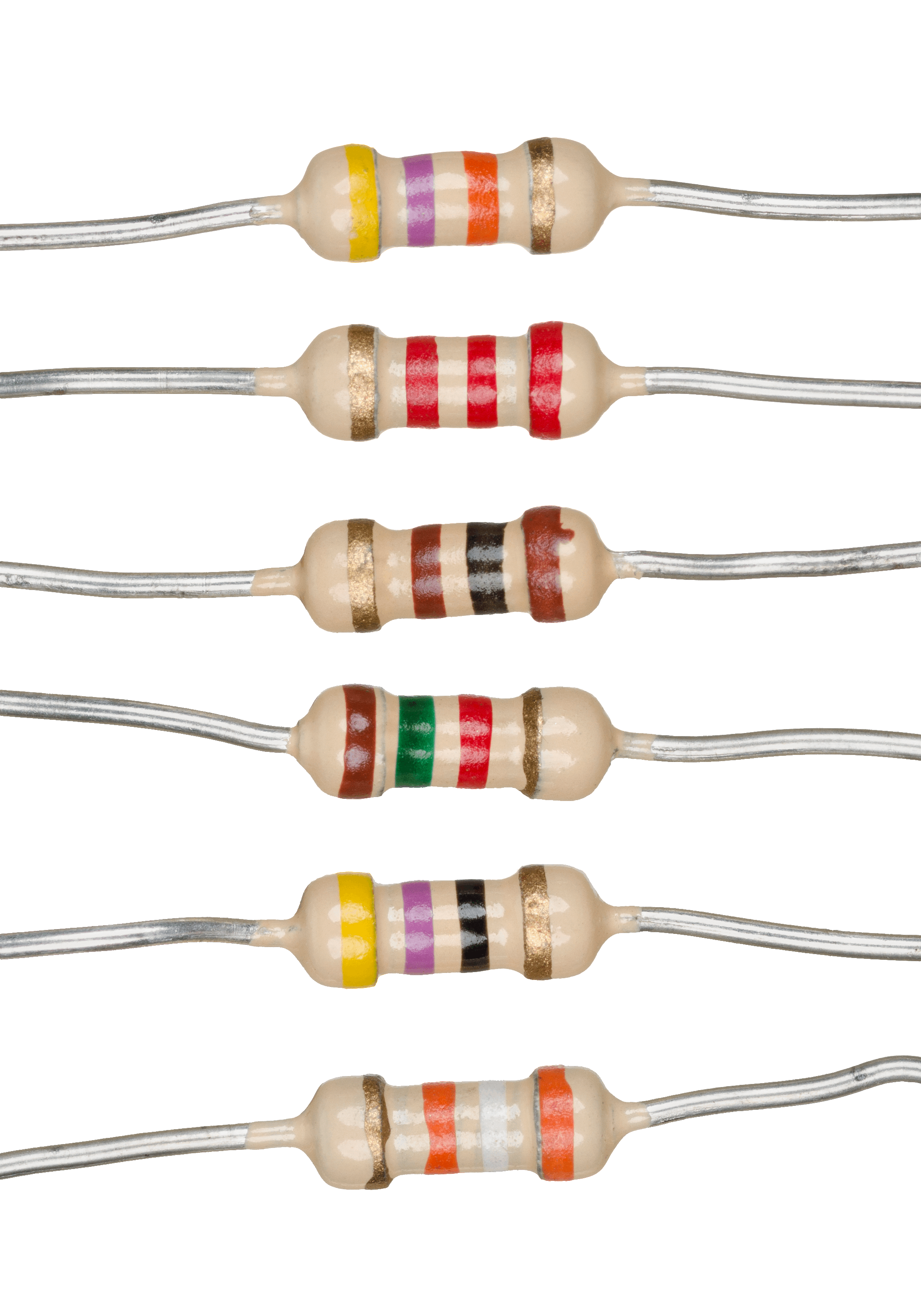
The creation of a carbon film resistor is a marvel of precision manufacturing. It begins with a high-purity ceramic rod, typically made of alumina, which serves as the insulating core. A thin, uniform layer of carbon is then deposited onto this rod through a process called vacuum deposition or a similar chemical vapor deposition (CVD) technique. This carbon layer is the resistive element. To achieve the exact resistance value, a helical groove is precisely cut into the carbon coating, effectively increasing the resistive path length. The resistance is inversely proportional to the depth and width of this groove. Finally, end caps are attached, and leads are soldered on, followed by encapsulation in a protective lacquer or epoxy coating. The entire process is meticulously controlled to ensure consistency and adherence to specifications, often involving automated machinery developed by firms like TT Electronics.
📊 Key Facts & Numbers
While no single inventor is solely credited with the carbon film resistor, key figures and organizations shaped its development and mass production. Western Electric, the manufacturing arm of AT&T, played a pivotal role in early standardization and large-scale production for telecommunications. Companies like Vishay Intertechnology, Yageo Electronic Components, and Murata Manufacturing are major global manufacturers today, producing billions of these components. Research institutions and university labs, often funded by government grants or industry partnerships, have also contributed to refining deposition techniques and understanding material properties. The IEEE and its publications have documented much of the foundational research in resistive materials and component design.
👥 Key People & Organizations
Despite the rise of more advanced resistor technologies like metal film resistors and surface-mount components, manufacturers are continuously optimizing production processes to improve stability and reduce costs. There's ongoing research into novel carbon-based composite materials that could offer enhanced performance characteristics. The demand from emerging markets and the continued need for cost-effective solutions in consumer electronics, automotive applications, and industrial controls ensure their sustained production. Companies like King-State Ent. Corp. continue to innovate within this established technology.
🌍 Cultural Impact & Influence
One persistent debate surrounding carbon film resistors centers on their long-term stability and noise characteristics compared to metal film alternatives. The resistance of carbon film resistors can drift more significantly over time and with temperature changes, making them less suitable for high-precision analog circuits or sensitive measurement equipment. Critics point to the higher noise floor of carbon film resistors compared to metal film alternatives, which can be problematic in audio or RF applications. However, proponents argue that for the vast majority of digital and general-purpose analog circuits, the performance trade-offs are negligible, especially when considering the substantial cost savings. The controversy often boils down to application-specific requirements versus overall cost-effectiveness.
⚡ Current State & Latest Developments
The future of carbon film resistors is likely one of continued refinement rather than radical transformation. Expect incremental improvements in manufacturing precision, leading to tighter tolerances and better temperature stability. Research into advanced carbon allotropes, such as graphene or carbon nanotubes, could eventually lead to next-generation carbon-based resistors with superior electrical properties, though these are currently far more expensive to produce. The integration of resistors directly into PCBs through printed electronics techniques might also see carbon-based inks play a larger role. However, for the foreseeable future, the traditional ceramic-rod-based carbon film resistor will likely persist as a cost-effective workhorse.
🤔 Controversies & Debates
Carbon film resistors are found in an astonishing array of applications due to their versatility and low cost. They are essential in power supplies for current limiting and voltage division, in audio amplifiers for biasing transistors and setting gain, and in control circuits for appliances like washing machines and microwaves. They are used in automotive electronics for sensor conditioning and signal processing, in lighting controls, and as general-purpose components in virtually all consumer electronics, from televisions to toys. Their simplicity and robustness make them ideal for educational kits and hobbyist projects, such as those found on Instructables.
🔮 Future Outlook & Predictions
For those seeking to understand the broader context of resistive components, exploring metal film resistors offers a direct comparison in terms of performance and cost. The principles of Ohm's Law are fundamental to understanding how all resistors function. For those interested in the manufacturing side, researching vacuum deposition and chemical vapor deposition techniques will provide insight into the fabrication processes. Understanding tolerance and precision in electronic components is also crucial. For a historical perspective on electronic components, delving into the history of the transistor and the integrated circuit reveals how resistors fit into the larger evolution of electronics.
Key Facts
- Category
- technology
- Type
- product