
Contents
Overview
The understanding of capillary action stretches back centuries. While early observations are attributed to Leonardo da Vinci in his notebooks around the late 15th century, where he noted the rise of water in narrow tubes, it was the 17th-century physicist Giacomo Filippo Maraldi who conducted more systematic experiments, observing the phenomenon in glass tubes and relating it to the surface properties of liquids. Later, in the early 18th century, Henri Gautier provided further quantitative data, measuring the height to which water rose in tubes of varying diameters. The theoretical underpinnings began to solidify with the work of Thomas Young in 1805 and later, Pierre-Simon Laplace, who developed the Young-Laplace equation, which mathematically describes the pressure difference across a curved liquid surface, a key component in understanding capillary phenomena. This foundational work laid the groundwork for subsequent investigations into surface tension and intermolecular forces.
⚙️ How It Works
At its heart, capillary action is a battle between adhesive and cohesive forces. Adhesion refers to the attraction between molecules of different substances – in this case, the liquid and the walls of the confining space (like a glass tube or porous material). Cohesion refers to the attraction between molecules of the same substance – the liquid itself, which creates surface tension. When the adhesive forces between the liquid and the wall are stronger than the cohesive forces within the liquid, the liquid 'wets' the surface and is drawn upwards along the wall. This upward pull, driven by surface tension, is what causes the liquid to rise. The narrower the tube or pore, the more significant the surface area of the wall relative to the volume of the liquid, and thus the higher the liquid will climb, a principle quantified by Jurin's Law, which states that the height of the liquid column is inversely proportional to the diameter of the tube.
📊 Key Facts & Numbers
The scale of capillary action is often astonishing. Water can rise up to 10 meters (33 feet) in a perfectly narrow tube due to capillary action alone, a feat crucial for trees to transport water from roots to leaves. The surface tension of water is approximately 0.072 Newtons per meter (N/m) at room temperature, a value that significantly influences its capillary behavior. In porous materials like soil, capillary action can draw water up to heights of several centimeters, impacting agricultural irrigation and water retention. The pore size distribution in materials like activated carbon, often ranging from 0.2 to 50 nanometers, dictates its effectiveness in wicking and adsorption processes, with smaller pores exhibiting stronger capillary forces. Even in the human body, capillary action plays a role in processes like blood flow in capillaries, which have diameters as small as 5-10 micrometers.
👥 Key People & Organizations
While no single individual 'discovered' capillary action, several scientists made pivotal contributions. Leonardo da Vinci first documented observations of water rising in narrow tubes. Henri Gautier, in the early 18th century, performed early quantitative measurements. Thomas Young, in 1805, and Pierre-Simon Laplace, in 1806, independently developed the theoretical framework, including the Young-Laplace equation, to explain the forces involved. Later, Carl Friedrich Gauss refined these theories. In modern times, researchers at institutions like the Massachusetts Institute of Technology (MIT) and Stanford University continue to explore capillary phenomena in microfluidics and nanotechnology. Organizations like the American Physical Society (APS) and the Royal Society of Chemistry (RSC) publish extensive research on surface science and fluid mechanics.
🌍 Cultural Impact & Influence
Capillary action is a silent architect of the natural world and a fundamental principle in countless human endeavors. It's the reason plants can hydrate their towering structures, a process vital for global ecosystems and agriculture. In art, it explains how paint adheres to a brush and transfers to a canvas, influencing the very texture and stroke of a painting. The wicking of a candle's flame, drawing melted wax upwards to be consumed, is a direct application. This phenomenon also underpins the operation of everyday items like paper towels, sponges, and even the ink delivery system in certain pens, demonstrating its pervasive, albeit often unnoticed, presence in our daily lives and cultural artifacts.
⚡ Current State & Latest Developments
Current research in capillary action is heavily focused on microfluidics and nanotechnology, where precise control of fluid behavior in tiny channels is paramount. Scientists are developing advanced microfluidic devices for diagnostics, drug delivery, and lab-on-a-chip technologies, all relying on engineered capillary forces. The development of novel porous materials with tailored pore structures for applications like water purification, energy storage (e.g., in batteries and supercapacitors), and advanced filtration systems is also a major area of focus. Furthermore, understanding capillary action in complex biological systems, such as the transport of fluids in the brain or the behavior of mucus in the respiratory tract, is an active frontier, with researchers at institutions like the Max Planck Institute for Dynamics and Self-Organization contributing significantly.
🤔 Controversies & Debates
A persistent debate revolves around the precise role of capillary action versus other forces in complex biological systems, particularly in the ascent of sap in tall trees. While capillary action is a significant contributor, the extent to which it alone explains the phenomenon, versus the role of transpiration pull (cohesion-tension theory) and root pressure, remains a subject of ongoing scientific discussion. Another area of contention is the precise modeling of capillary flow in heterogeneous porous media, where variations in pore size and surface chemistry can lead to unpredictable flow patterns. Furthermore, the potential for capillary action to drive unwanted fluid transport in engineered systems, leading to leakage or material degradation, is a practical concern that fuels research into mitigation strategies.
🔮 Future Outlook & Predictions
The future of capillary action research points towards increasingly sophisticated applications in micro- and nanofluidics. We can expect to see more advanced lab-on-a-chip devices capable of performing complex biological assays with minimal sample volumes, driven by precisely controlled capillary flows. The development of 'smart' materials that can actively manage capillary transport for applications like self-healing concrete or adaptive wicking fabrics is on the horizon. In energy, capillary effects will likely be further exploited in next-generation batteries and fuel cells for efficient fluid management. The challenge will be to scale these phenomena reliably and cost-effectively, potentially leading to breakthroughs in areas like atmospheric water harvesting and advanced chemical manufacturing processes.
💡 Practical Applications
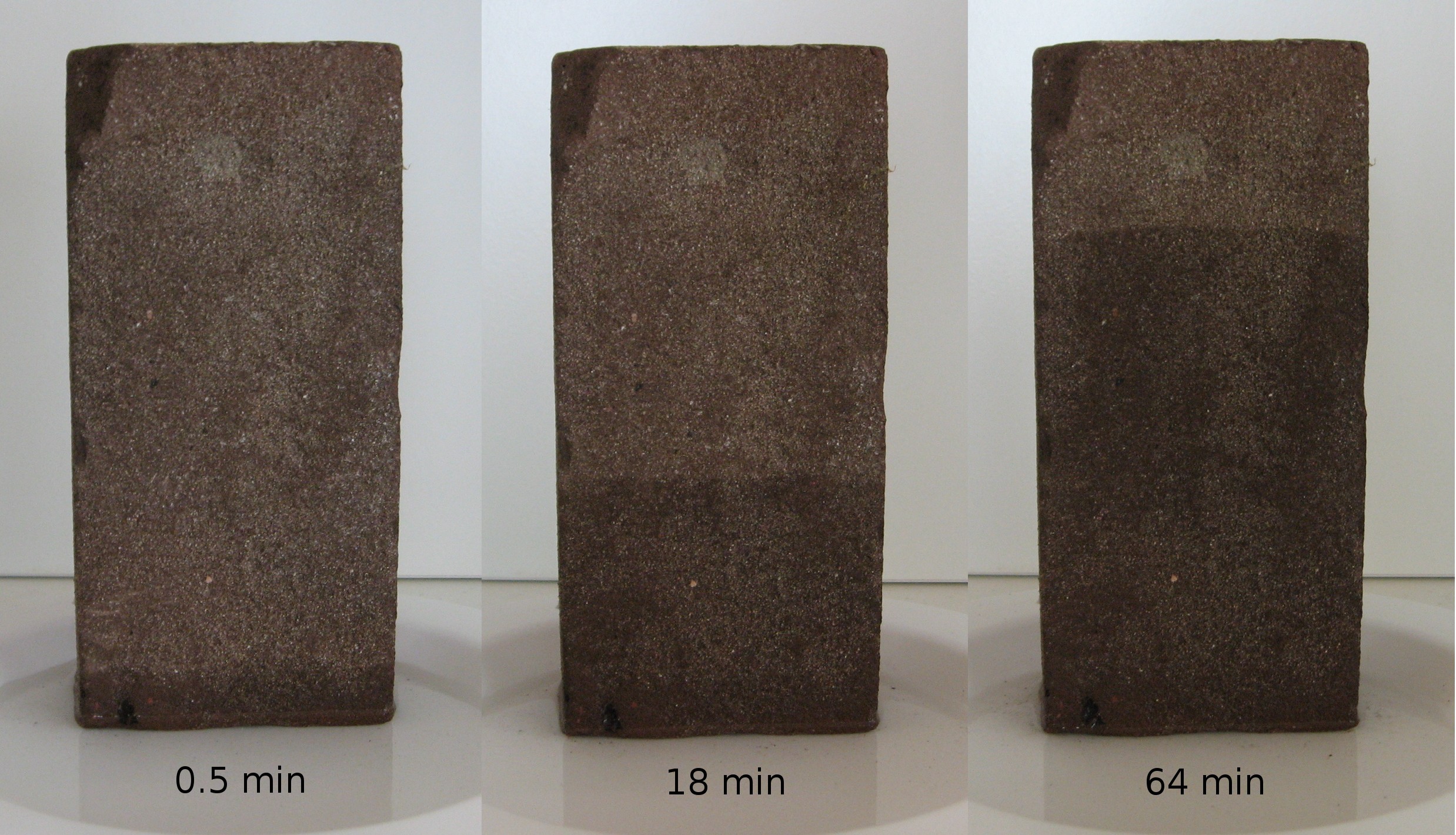
Capillary action is indispensable in numerous practical applications. In medicine, it's utilized in diagnostic tests like pregnancy tests and glucose meters, where small liquid samples are wicked across test strips. In agriculture, understanding soil capillarity is crucial for irrigation and preventing soil erosion. In construction, it explains how moisture can rise through concrete and masonry, leading to degradation, and informs the development of waterproofing materials. In textiles, wicking fabrics designed for sportswear utilize capillary action to draw sweat away from the skin, keeping the wearer dry. Even in the kitchen, the way oil travels up a wick in a fondue pot or how water is absorbed by a paper towel demonstrates its everyday utility.
Key Facts
- Category
- science
- Type
- topic