
Contents
Overview
The concept of a bus in computing traces its lineage back to the earliest days of digital computers. Early mainframes in the 1950s and 1960s often featured proprietary internal pathways. The S-100 bus was one of the first widely adopted standards in early microcomputers. The S-100 bus was popular in early microcomputers like the Altair 8800 in the mid-1970s. The VMEbus emerged as a significant standard in industrial and embedded systems during the 1980s. Early buses were limited by their parallel nature and susceptibility to signal degradation over distance, paving the way for more advanced designs.
⚙️ How It Works
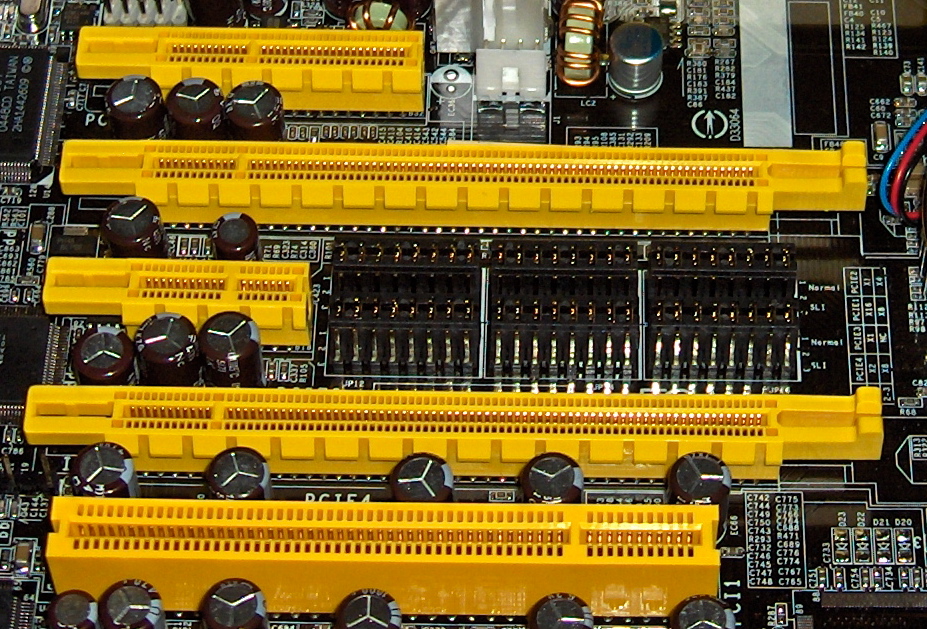
At its core, a bus is a shared communication pathway that connects multiple electronic components, allowing them to exchange data. Buses can be classified by their function: the system bus and expansion buses. The system bus connects the CPU to memory and other core components, while expansion buses allow for the addition of peripheral devices. Modern buses often use serial transmission, sending data one bit at a time over fewer wires but at much higher frequencies, a stark contrast to the older parallel buses that sent multiple bits simultaneously. Technologies like PCI Express (PCIe) utilize differential signaling and point-to-point connections to achieve remarkable speeds, effectively creating dedicated lanes for each device.
📊 Key Facts & Numbers
The NVMe protocol can leverage up to four PCIe 3.0 lanes.
👥 Key People & Organizations
Key figures in bus architecture include engineers who designed early standards and companies that championed their adoption. Gordon Moore was instrumental in the development of early microprocessors and associated bus technologies. Jack Kilby was an inventor of the integrated circuit at Texas Instruments. IBM was pivotal in popularizing specific bus architectures like ISA. Apple was pivotal in popularizing specific bus architectures like NuBus. The IEEE has been crucial in developing and maintaining open bus standards. The PCI Special Interest Group (PCI-SIG) has been crucial in developing and maintaining open bus standards.
🌍 Cultural Impact & Influence
Bus architecture has profoundly shaped the user experience and capabilities of computing devices. USB has become the most common interface for consumer electronics, influencing everything from smartphone design to the proliferation of charging cables. The very modularity and upgradeability of personal computers owe a significant debt to the evolution of bus architectures.
⚡ Current State & Latest Developments
The current landscape of bus architecture is dominated by high-speed serial interconnects. PCIe 6.0 is beginning to roll out, doubling the bandwidth again through PAM4 signaling. NVMe 2.0 introduces further enhancements. USB4 and Thunderbolt 4 are converging.
🤔 Controversies & Debates
One of the most persistent debates in bus architecture centers on the trade-offs between parallel and serial interfaces. While parallel buses offered higher theoretical bandwidth in their heyday, they suffered from clock skew, signal integrity issues, and a large number of pins, making them complex and expensive to implement at higher speeds. Serial interfaces, despite sending data one bit at a time, overcome these limitations through significantly higher clock frequencies and advanced signaling techniques, ultimately achieving greater effective bandwidth and scalability. Another point of contention is the balance between standardization and proprietary solutions. Open standards like PCIe and USB foster interoperability and a broad ecosystem, but proprietary interconnects like NVIDIA's NVLink or AMD's Infinity Fabric can offer performance advantages within specific hardware ecosystems. The ongoing discussion also involves the increasing complexity of bus protocols and the challenges of managing them efficiently, particularly in heterogeneous computing environments.
🔮 Future Outlook & Predictions
The future of bus architecture points towards even higher speeds, lower latency, and greater integration. CXL is poised to become a dominant force in data centers, enabling dynamic memory pooling and resource sharing, which could fundamentally alter server architecture.
💡 Practical Applications
The ability to easily add expansion cards via buses like ISA and PCI fueled the growth of the PC clone market and fostered a vibrant ecosystem of third-party hardware manufacturers. The standardization of buses like Universal Serial Bus (USB) revolutionized peripheral connectivity, allowing users to seamlessly connect everything from keyboards and mice to external hard drives and printers across different operating systems and devices. The high bandwidth of PCIe has enabled the development of powerful graphics cards essential for gaming and professional visualization, as well as high-speed storage solutions that dramatically reduce application load times and file transfer durations.
Key Facts
- Category
- technology
- Type
- topic