
Contents
Overview
The genesis of Birmingham New Street railway station lies in the ambitious Victorian era's railway expansion. The Birmingham Railway Company opened the initial station, which later merged into the London and North Western Railway. The initial station was designed by Edward Alfred Waterhouse, a stark contrast to its later incarnations. Its strategic location was key, connecting lines from London, Manchester, and Bristol, solidifying Birmingham's position as a crucial railway junction. The station's early years were marked by rapid growth, necessitating expansions and modifications to accommodate the ever-increasing volume of passengers and freight. The current station's lineage traces back to the post-war reconstruction era, with significant redevelopment planned and executed throughout the latter half of the 20th century, culminating in the major overhaul that began in the early 2000s.
⚙️ How It Works
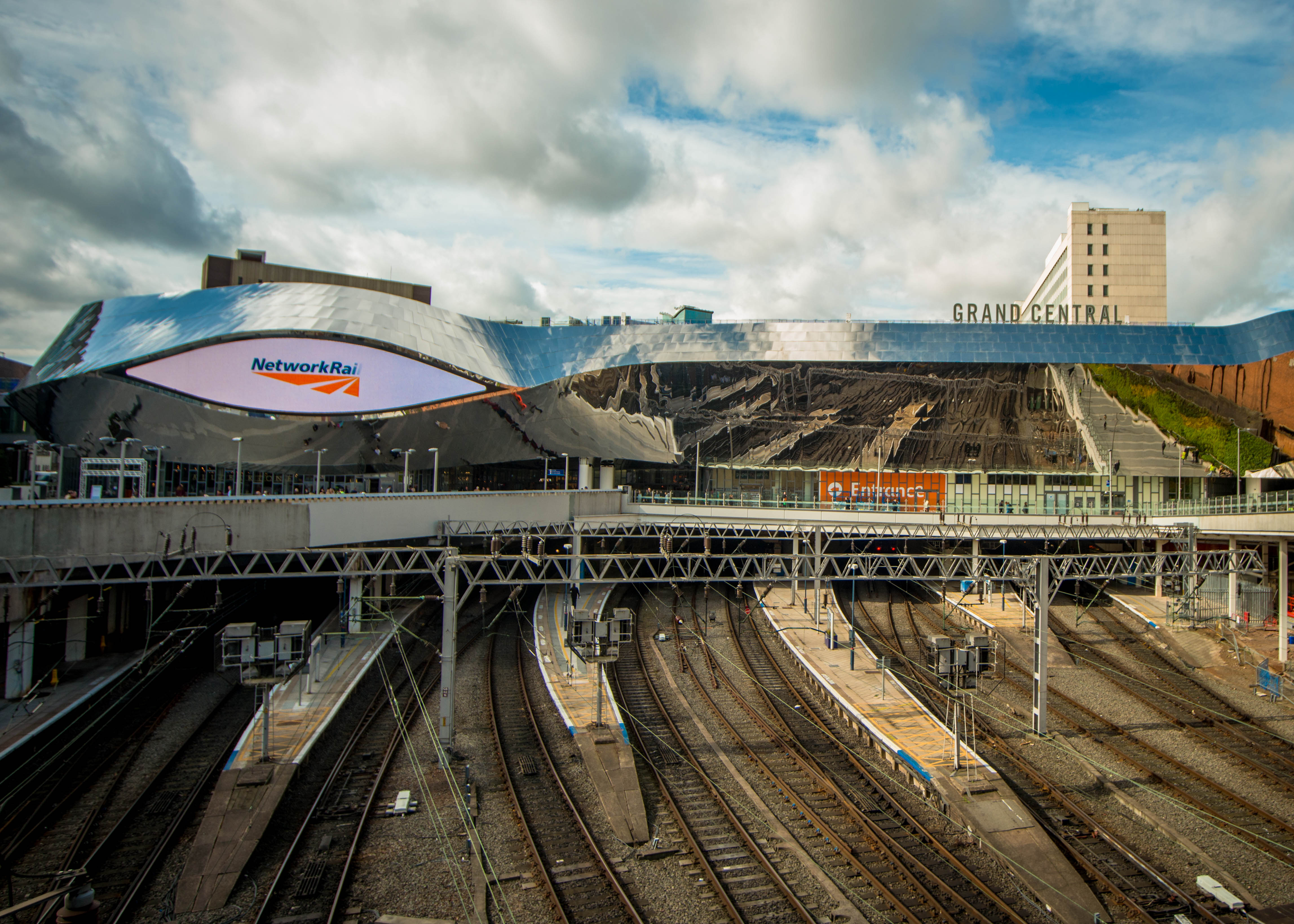
Birmingham New Street functions as a complex, multi-layered interchange designed to facilitate high-volume passenger and freight movement across the UK. Platforms 1-8 are situated on the upper level and platforms 9-12 are situated on the lower level, catering to different service types. The station's operational heart is its intricate track layout and signaling system, managed by Network Rail, ensuring the safe and efficient flow of trains from various national lines, including the West Coast Main Line. Passengers navigate the station via a series of concourses, escalators, and lifts, connecting the platforms to the main station building and the Grand Central shopping centre above. The station's infrastructure is designed to handle peak loads, with sophisticated timetabling and operational procedures to minimize delays, though its sheer scale can sometimes lead to congestion.
📊 Key Facts & Numbers
New Street is a titan of the British rail network, handling a significant volume of passengers daily, a figure that places it among the busiest stations in the United Kingdom. The station is served by a high volume of trains daily, a testament to its operational intensity. Its strategic importance is reflected in the fact that it is the central hub for CrossCountry services, which operate the longest domestic rail network in Britain. The station's redevelopment project involved the construction of over 100,000 square meters of retail space within Grand Central. Transport for Wales and Network Rail funded part of the redevelopment. The station's annual revenue generation is substantial, though specific figures are not publicly itemized.
👥 Key People & Organizations
The station's history is intertwined with several key figures and organizations. The London and North Western Railway was instrumental in its early development. Later, British Rail oversaw significant transformations, particularly the controversial 1960s rebuild. The current iteration is largely the product of a massive redevelopment project managed by Network Rail in partnership with Transport for West Midlands (formerly Centro) and the private sector developers of Grand Central. Key architects involved in the 1960s rebuild included John Madin, while the more recent redevelopment saw contributions from firms like MACE and Atkins. The station is operated by Avanti West Coast for intercity services and West Midlands Trains for regional and local routes, both under franchise agreements.
🌍 Cultural Impact & Influence
Birmingham New Street's impact on culture and identity is profound, albeit often debated. Its imposing concrete structure, a hallmark of Brutalist architecture, became a symbol of post-war urban regeneration, eliciting strong reactions from admiration to disdain. For generations of Brummies, it has been the gateway to the city, a place of arrivals and departures, of reunions and farewells, deeply embedded in personal histories. The station's integration with Grand Central has transformed its public perception, adding a modern retail and dining layer that softens its previously utilitarian image. Its presence has influenced local art, literature, and film, often depicted as a symbol of Birmingham's industrial might and its evolving urban landscape. The sheer volume of people passing through also makes it a unique microcosm of British society.
⚡ Current State & Latest Developments
As of 2024, Birmingham New Street remains a bustling hub, with ongoing efforts to optimize passenger flow and enhance the travel experience. West Midlands Trains continues to operate extensive local services, including the vital Cross-City Line, while Avanti West Coast and CrossCountry maintain their long-distance routes. Network Rail is continuously involved in infrastructure maintenance and minor upgrades to ensure operational efficiency. The station's integration with the wider West Midlands Metro network, particularly the planned extension to Five Ways, promises to further enhance its connectivity. Discussions are ongoing regarding potential future enhancements, including improved accessibility and passenger amenities, building on the success of the Grand Central development.
🤔 Controversies & Debates
The station has long been a lightning rod for criticism. Its 1960s rebuild, intended to be a modern marvel, is often cited as a prime example of Brutalist architecture gone wrong, with its vast, often dimly lit concrete expanses and labyrinthine corridors earning it nicknames like 'the concrete monster.' Passengers frequently complain about confusing signage and the difficulty of navigating between platforms and exits. The sheer scale of the station, while a testament to its importance, can also lead to overcrowding and a sense of being overwhelmed. While the Grand Central redevelopment has significantly improved the aesthetic and retail offering, the core operational challenges of managing such a high-volume interchange persist, leading to ongoing debates about its design and functionality.
🔮 Future Outlook & Predictions
The future of Birmingham New Street is likely to involve further integration with evolving transport networks and a continued focus on passenger experience. Proposals for enhanced accessibility, including improved step-free access and clearer wayfinding, are expected to be prioritized. The station's role as a key hub for HS2 (High Speed 2), should it proceed as planned, would necessitate significant further upgrades and potentially a re-imagining of its spatial configuration to accommodate high-speed services. There's also a growing emphasis on sustainability, with potential for further energy efficiency measures and integration of green spaces. The ongoing evolution of passenger expectations, driven by technology and a desire for seamless travel, will undoubtedly shape its next chapter.
💡 Practical Applications
Birmingham New Street's primary application is as a critical transport interchange, facilitating millions of journeys annually. It serves as a gateway for commuters, business travelers, and tourists accessing Birmingham and the wider West Midlands region. Beyond passenger transport, it's a vital hub for freight logistics, connecting industrial centers across the UK. The station's retail component, Grand Central, also functions as a significant commercial and leisure destination, attracting shoppers and diners. Furthermore, its infrastructure is utilized for various operational purposes by Network Rail, including maintenance depots and control centers, making it a multifaceted operational entity.
Key Facts
- Category
- places
- Type
- topic