
Contents
- 🎸 The Low End Theory: What is a Bassist?
- 🛠️ Essential Gear: Instruments of the Bassist
- 🎶 Genre Anchors: Where Bassists Lay Down the Groove
- 🤝 The Rhythm Section: Collaboration & Influence
- 📈 Skill Development: Becoming a Better Bassist
- 💰 The Bassist's Gig: Earning a Living
- ⭐ Iconic Bassists: Legends of the Low End
- 🔮 The Future of Bass: Digital & Beyond
- Frequently Asked Questions
- Related Topics
Overview
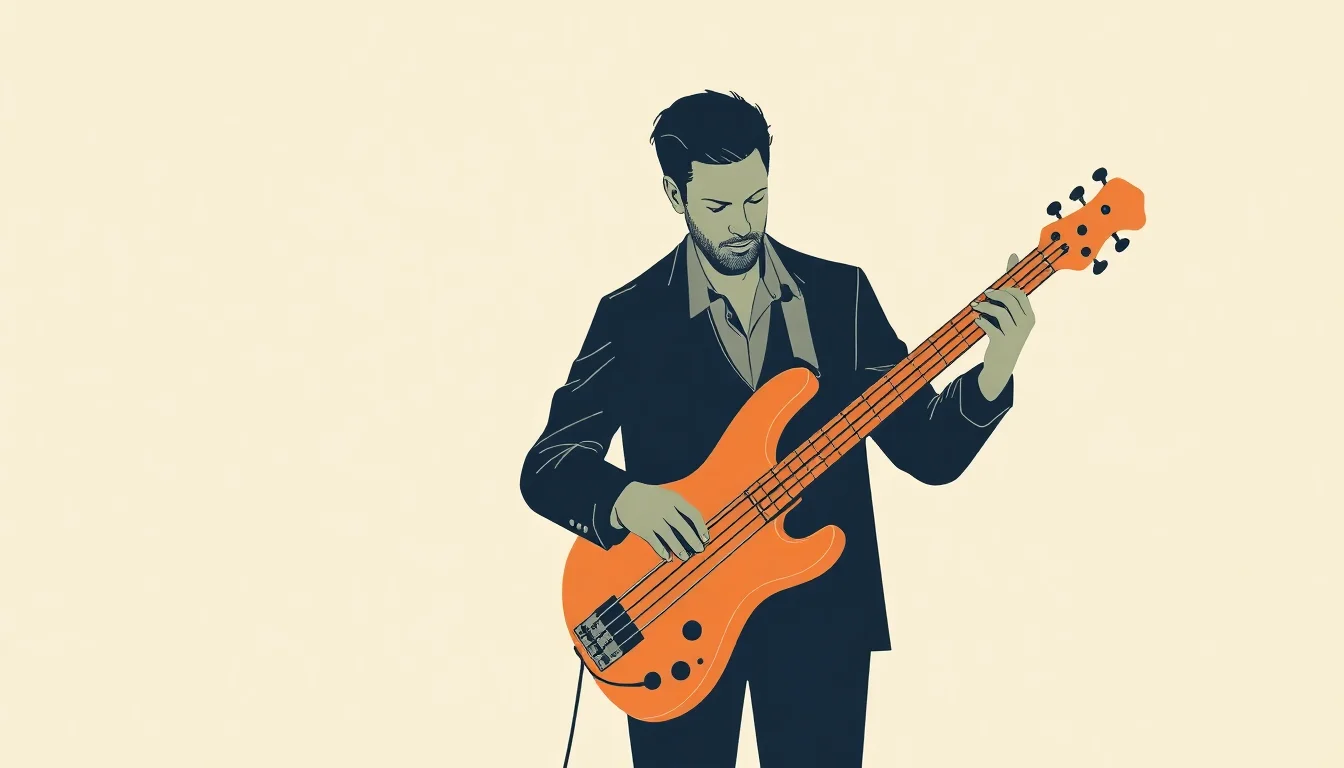
A bassist is the rhythmic and harmonic anchor of nearly any musical ensemble, providing the foundational low frequencies that give music its depth and drive. They are the unsung heroes, often felt more than heard, yet indispensable for a cohesive sound. From the Orchestral Music pit to the Rock Music stage, the bassist's role is to connect the Rhythm Section (typically with a Drummer) to the harmonic structure provided by Guitarist or Keyboardist. Without a solid bassline, music often feels thin, disjointed, and lacks its essential 'pocket'.
🛠️ Essential Gear: Instruments of the Bassist
The primary instruments associated with bassists are the Bass Guitar and the Double Bass (or upright bass). The bass guitar, popularized in the mid-20th century, revolutionized popular music with its electric amplification and portability, becoming a staple in Rock Music, Funk Music, and Jazz Fusion. The double bass, with its rich, acoustic resonance, remains central to Classical Music, Traditional Jazz, and Bluegrass Music. Beyond these, bassists might also specialize in Keyboard Bass (synthesizers or organs playing bass lines) or even low brass instruments like the Tuba or Trombone in specific contexts like Brass Band or New Orleans Jazz.
🎶 Genre Anchors: Where Bassists Lay Down the Groove
Bassists are integral across an astonishing array of musical genres, each demanding unique stylistic approaches. In Funk Music, the bass is often the lead melodic voice, driving the groove with intricate Slap Bass lines, while in Heavy Metal, it provides a powerful, often distorted, low-end rumble that underpins aggressive Guitar Riff. Jazz Bassist are masters of improvisation and walking bass lines, creating harmonic movement and rhythmic propulsion simultaneously. Even in Electronic Music, the 'bass drop' or sustained sub-bass frequencies are often the most impactful elements, directly influenced by the traditional bassist's role.
🤝 The Rhythm Section: Collaboration & Influence
The bassist's relationship with the Drummer forms the bedrock of any band, often referred to as the 'rhythm section'. This symbiotic partnership dictates the Groove (Music), tempo, and overall feel of a piece. A great bassist anticipates the drummer's accents and fills, locking in to create an irresistible rhythmic pulse. This collaborative dynamic extends to Harmonic Instrument like guitars and keyboards, where the bassist outlines chord changes and provides a stable foundation for melodic improvisation and accompaniment. The interplay between these elements is crucial for a high Vibe Score performance.
📈 Skill Development: Becoming a Better Bassist
Developing as a bassist requires a blend of technical proficiency, harmonic understanding, and rhythmic precision. This includes mastering Fingerstyle Bass, Bass Picking, and potentially Slap and Pop Bass. Understanding Music Theory, particularly Harmony and Chord Progression, is paramount for creating effective bass lines that serve the song. Ear training, transcribing Famous Basslines, and consistent practice with a Metronome are non-negotiable for any aspiring bassist looking to contribute meaningfully to a band or project. Many bassists also explore Music Production to better understand how their instrument sits in a mix.
💰 The Bassist's Gig: Earning a Living
For many bassists, earning a living involves a diverse portfolio of activities. This can include Live Performance (touring with bands, playing local gigs), Studio Recording (session work for albums, film scores, commercials), and Music Education (teaching private lessons, workshops, or online courses). The rise of Online Collaboration and Home Studio has also opened new avenues for remote session work, allowing bassists to contribute to projects globally without leaving their personal space. Diversification is key in the modern music industry, often requiring skills beyond just playing the instrument.
⭐ Iconic Bassists: Legends of the Low End
The history of bass is punctuated by figures who redefined the instrument's role and capabilities. James Jamerson's melodic Motown lines, Jaco Pastorius's revolutionary fretless technique and harmonic sophistication, and Paul McCartney's iconic, song-serving basslines are just a few examples. More recently, artists like Thundercat have pushed the boundaries of bass as a lead instrument in Modern Jazz and Hip Hop, while Victor Wooten continues to inspire with his unparalleled technical mastery and philosophical approach to music. These individuals didn't just play the bass; they shaped entire genres and influenced countless musicians.
🔮 The Future of Bass: Digital & Beyond
The future of the bassist is likely to be a blend of traditional craftsmanship and technological integration. Digital Bass Instrument, Virtual Instrument, and advanced Modeling Software are already expanding the sonic palette available. AI Music Generation tools might assist in creating bass lines, but the human element of feel, improvisation, and interaction remains irreplaceable. As music continues to evolve, the bassist's role will adapt, perhaps becoming even more focused on sound design, programming, and the nuanced interaction with Electronic Music Production, while still holding down the fundamental Groove (Music) that defines their contribution.
Key Facts
- Year
- -10000
- Origin
- Ancient Egypt
- Category
- Musician
- Type
- Person
Frequently Asked Questions
What's the difference between a bass guitar and a double bass?
The Bass Guitar is an electric instrument, typically fretted, played horizontally, and amplified, making it common in Rock Music, Funk Music, and Pop Music. The Double Bass is a large, acoustic, fretless string instrument played vertically, primarily found in Classical Music, Jazz Music, and Bluegrass Music. Their sound, playing technique, and historical contexts are quite distinct.
Do bassists need to know music theory?
While some legendary bassists have thrived on instinct, a solid understanding of Music Theory – especially Harmony, Musical Scale, and Chord Progression – is incredibly beneficial. It allows bassists to understand why certain notes work, to improvise effectively, and to communicate more clearly with other musicians, ultimately making them more versatile and in-demand.
Is it harder to play bass or guitar?
This is a classic debate! Both instruments have unique challenges. Bass often requires a strong sense of Rhythm and Groove (Music), precise timing, and a deep understanding of how to support a song harmonically. Guitar often involves more complex chord shapes, faster melodic runs, and intricate soloing. Neither is inherently 'harder'; they simply demand different skill sets and musical approaches, and mastery of either takes years of dedication.
What's a 'walking bass line'?
A Walking Bass Line is a common technique in Jazz Music where the bassist plays a continuous sequence of notes, typically one note per beat, that outlines the Chord Progression and provides a strong rhythmic pulse. These lines often 'walk' up and down the scale, creating melodic interest while maintaining the harmonic foundation. It's a hallmark of traditional jazz bass playing.
Can I learn bass without a teacher?
Absolutely. With the abundance of Online Music Lessons, YouTube Music Tutorials, and Bass Tablature available, self-teaching is more accessible than ever. However, a good teacher can provide personalized feedback, correct bad habits early, and guide you through a structured learning path, which can significantly accelerate progress and prevent frustration. It depends on your discipline and learning style.