
Contents
- 🎵 Origins & History
- ⚙️ How It Works
- 📊 Key Facts & Numbers
- 👥 Key People & Organizations
- 🌍 Cultural Impact & Influence
- ⚡ Current State & Latest Developments
- 🤔 Controversies & Debates
- 🔮 Future Outlook & Predictions
- 💡 Practical Applications
- 📚 Related Topics & Deeper Reading
- Frequently Asked Questions
- References
- Related Topics
Overview
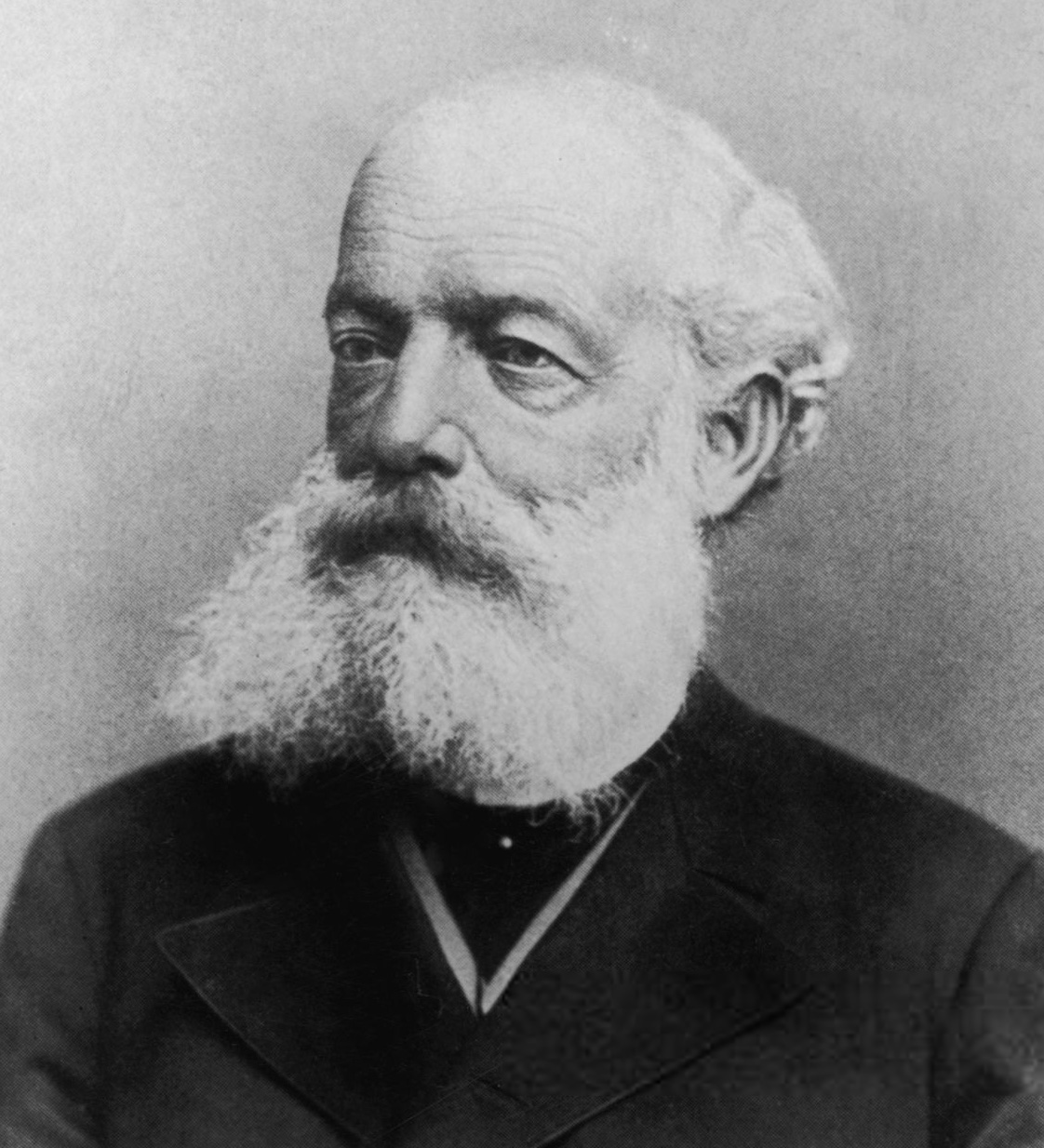
Friedrich August Kekulé was born in Darmstadt, Grand Duchy of Hesse, on September 7, 1829, into a family with a long history of public service. His father, Karl Kekulé, was a civil servant, and his early education took place at the Ludwig-Georgs-Gymnasium. Initially drawn to architecture, Kekulé's path shifted dramatically after attending a lecture by Justus von Liebig at the University of Giessen in 1847. This encounter ignited a passion for chemistry, leading him to pursue the subject with fervor. After graduating from Giessen, he spent time in Paris, where he was influenced by chemists like Charles Frédéric Gerhardt and Jean-Baptiste Dumas, and later studied in Ghent under Jean Servais Stas. These formative years abroad exposed him to diverse chemical theories and experimental techniques, shaping his nascent ideas about molecular architecture before he returned to Germany to establish his own influential career, eventually holding professorships at Heidelberg University, Ghent University, and finally the University of Bonn from 1867 until his death.
⚙️ How It Works
Kekulé's most profound contribution was the theory of chemical structure, particularly his proposal for the structure of benzene. Before Kekulé, the molecular formula C₆H₆ was known, but its unusual stability and reactivity baffled chemists. Kekulé famously described dreaming of a snake biting its own tail, which he interpreted as a symbol for a ring structure. He proposed that the six carbon atoms in benzene are arranged in a hexagonal ring, with alternating single and double bonds. This 'Kekulé structure' explained why benzene behaved differently from typical alkenes, undergoing substitution reactions rather than addition. He further posited that the carbon atom has a valency of four and can form chains, rings, and branched structures, a foundational concept for understanding the complexity of organic molecules. This structural theory provided a systematic way to classify and predict the properties of organic compounds, moving chemistry from a descriptive science to a predictive one.
📊 Key Facts & Numbers
Kekulé's scientific output was substantial, with over 100 publications to his name. He was a professor for over 30 years, mentoring numerous students who would go on to make significant contributions themselves. His seminal work on benzene was published in 1865, with refinements appearing in 1872. The theory of valency, which he championed, stated that carbon atoms typically form four bonds, a number now universally accepted. His research was recognized with prestigious awards, including the Copley Medal in 1877 and the Pour le Mérite order. By the time of his death in 1896, he was one of the most respected chemists in Europe, with his theories forming the bedrock of organic chemistry education worldwide. His influence extended beyond academia, with his work underpinning the burgeoning chemical industry of the late 19th century.
👥 Key People & Organizations
Beyond Kekulé himself, several key figures and institutions were instrumental in his career and the dissemination of his ideas. His father, Karl Kekulé, provided early familial support. His early academic journey was shaped by Justus von Liebig at the University of Giessen and later by Jean-Baptiste Dumas and Charles Frédéric Gerhardt during his time in Paris. His professorships at Heidelberg University, Ghent University, and the University of Bonn provided the platforms for his teaching and research. His students, such as Emil Fischer (a Nobel laureate), carried his structural theories forward. Kekulé was also recognized by international scientific bodies, becoming a Foreign Member of the Royal Society in London. His son, Stephan Kekulé von Stradonitz, later took on the noble title, adding 'von Stradonitz' to the family name.
🌍 Cultural Impact & Influence
Kekulé's proposal of the benzene ring was a seismic event in chemistry, fundamentally altering the conceptual landscape. It provided the essential framework for understanding the vast class of aromatic compounds, which are crucial in pharmaceuticals, dyes, and polymers. The ability to predict and synthesize these compounds, thanks to Kekulé's structural insights, fueled the rapid growth of the chemical industry in Germany and globally during the late 19th and early 20th centuries. His emphasis on theoretical structure also elevated the status of organic chemistry as a rigorous scientific discipline. The 'Kekulé structure' became an iconic representation, appearing in textbooks and educational materials worldwide, symbolizing the elegance and power of chemical theory. His dream of the snake is often recounted as a charming anecdote illustrating the role of intuition and subconscious thought in scientific discovery.
⚡ Current State & Latest Developments
While Kekulé's core theories remain foundational, the understanding of benzene's structure has evolved. The simple alternating single-and-double bond model, while revolutionary, doesn't fully capture the electron delocalization in benzene. Modern quantum mechanics describes benzene as having a resonance hybrid structure, where the electrons are spread evenly around the ring, giving all carbon-carbon bonds equal length and strength. This more accurate picture, often represented by a circle within the hexagon, builds upon Kekulé's initial insight rather than replacing it. Current research in organic chemistry continues to explore complex cyclic and aromatic systems, building on the principles Kekulé established, particularly in areas like materials science and supramolecular chemistry.
🤔 Controversies & Debates
The primary debate surrounding Kekulé's work centers on the accuracy and completeness of his benzene structure. While his ring proposal was a monumental leap, the notion of fixed alternating single and double bonds was later refined by the concept of resonance and electron delocalization. Some historians also debate the exact nature and influence of his famous dream, questioning whether it was a literal vision or a post-hoc embellishment. Furthermore, the historical narrative sometimes overlooks the contributions of other chemists, like Josef Loschmidt, who had proposed cyclic structures for benzene earlier, though without the same theoretical backing or widespread acceptance. The extent to which Kekulé 'discovered' the structure versus synthesized existing ideas is a point of academic discussion.
🔮 Future Outlook & Predictions
The future of organic chemistry, deeply indebted to Kekulé's structural theories, lies in increasingly complex molecular architectures and advanced materials. Researchers are exploring novel cyclic systems with unique electronic and photophysical properties, pushing the boundaries of what's possible in areas like organic electronics and nanotechnology. The principles of valency and bonding that Kekulé elucidated will continue to guide the design of new catalysts, pharmaceuticals, and sustainable materials. As computational chemistry advances, models will become even more sophisticated in predicting molecular behavior, but the fundamental framework established by Kekulé will remain the essential starting point for understanding these intricate molecular designs.
💡 Practical Applications
Kekulé's work has direct and profound practical applications across numerous industries. The understanding of aromatic compounds derived from his benzene structure is indispensable in the synthesis of pharmaceuticals, from aspirin to complex chemotherapies. The dye industry, which experienced explosive growth in the late 19th century, relied heavily on the chemistry of aromatic compounds. Modern materials science, including the development of polymers, plastics, and advanced composites, is built upon the principles of carbon bonding and molecular structure that Kekulé helped define. Even seemingly simple products like perfumes and flavorings often involve aromatic molecules whose synthesis and properties are understood through the lens of Kekulé's foundational work.
Section 11
The concept of chemical structure is the bedrock of modern chemistry, explaining how atoms are arranged in molecules and dictating their properties. Kekulé's proposal for the benzene ring is perhaps the most iconic example of this concept in action. His work directly influenced the development of organic synthesis, the process of creating complex molecules from simpler ones. The field of spectroscopy, particularly techniques like NMR spectroscopy, provides experimental evidence for the structures Kekulé theorized, allowing chemists to 'see' molecules. His emphasis on theoretical frameworks also paved the way for computational chemistry, where computer simulations are used to predict molecular behavior. The historical context of his discoveries is crucial for understanding the evolution of scientific thought during the 19th century, a period of immense scientific advancement.
Section 12
The structure of benzene itself is a fundamental concept, explaining the properties of a vast class of organic compounds. Aromaticity is the term used to describe the special stability of benzene and similar ring systems. Valency theory, which Kekulé helped solidify, explains how atoms connect to form molecules. Organic synthesis is the practical application of these structural principles, allowing chemists to build complex molecules. The chemical industry has been profoundly shaped by the ability to synthesize aromatic compounds. His famous dream is often cited in discussions of scientific intuition and discovery. The University of Bonn is one of the key institutions where he conducted his influential work.
Section 13
The concept of chemical structure is the bedrock of modern chemistry, explaining how atoms are arranged in molecules and dictating their properties. Kekulé's proposal for the benzene ring is perhaps the most iconic example of this concept in action. His work directly influenced the development of organic synthesis, the process of creating complex molecules from simpler ones. The field of spectroscopy, particularly techniques like NMR spectroscopy, provides experimental evidence for the structures Kekulé theorized, allowing chemists to 'see' molecules. His emphasis on theoretical frameworks also paved the way for computational chemistry, where computer simulations are used to predict molecular behavior. The historical context of his discoveries is crucial for understanding the evolution of scientific thought during the 19th century, a period of immense scientific advancement.
Section 14
The structure of benzene itself is a fundamental concept, explaining the properties of a vast class of organic compounds. Aromaticity is the term used to describe the special stability of benzene and similar ring systems. Valency theory, which Kekulé helped solidify, explains how atoms connect to form molecules. Organic synthesis is the practical application of these structural principles, allowing chemists to build complex molecules. The chemical industry has been profoundly shaped by the ability to synthesize aromatic compounds. His famous dream is often cited in discussions of scientific intuition and discovery. The University of Bonn is one of the key institutions where he conducted his influential work.
Key Facts
- Year
- 1829-1896
- Origin
- Germany
- Category
- science
- Type
- person
Frequently Asked Questions
What is August Kekulé most famous for?
August Kekulé is most famous for proposing the cyclic structure of benzene in 1865. This groundbreaking idea, often attributed to a dream he had of a snake biting its own tail, explained benzene's unique stability and reactivity, laying the foundation for the entire field of aromatic chemistry. His work also significantly advanced the general theory of chemical structure and the concept of carbon's valency, fundamentally shaping modern organic chemistry.
How did Kekulé's benzene structure differ from modern understanding?
Kekulé's initial proposal depicted benzene as a hexagonal ring with alternating single and double bonds. While revolutionary for its time, this model didn't fully account for benzene's observed properties, such as all carbon-carbon bonds being equal in length and strength. Modern understanding, based on quantum mechanics and the concept of resonance, describes benzene as a hybrid structure where electrons are delocalized around the ring, creating a more stable and uniform bond. However, Kekulé's ring concept remains the essential framework upon which these later refinements were built.
What was the significance of Kekulé's work for the chemical industry?
Kekulé's structural theories, particularly his work on benzene, were pivotal for the burgeoning chemical industry of the late 19th century. Understanding aromatic compounds enabled the synthesis of a vast array of new substances, including synthetic dyes, pharmaceuticals, and explosives. His work provided chemists with the theoretical tools to design and create molecules with specific properties, driving innovation and economic growth in sectors reliant on organic chemistry.
What was Kekulé's role as an educator?
August Kekulé was a highly influential educator and professor, holding positions at several major German universities, most notably the University of Bonn. He trained a generation of chemists who became leaders in their fields, including Nobel laureate Emil Fischer. His lectures and textbooks standardized the teaching of organic chemistry, emphasizing the importance of theoretical structure and systematic nomenclature, thereby shaping chemistry curricula worldwide.
Was Kekulé's benzene dream a real event?
Kekulé himself recounted a dream where he saw atoms forming a chain that twisted into a snake biting its own tail, which he interpreted as a clue to benzene's ring structure. While the anecdote is widely circulated and highlights the role of subconscious thought in scientific discovery, its literal accuracy and precise influence are debated by historians. Regardless, the dream story has become an iconic part of chemical lore, illustrating how inspiration can strike in unexpected ways.
How did Kekulé contribute to the concept of valency?
Kekulé was a key proponent of the theory of valency, particularly the concept that carbon atoms typically form four bonds. This principle of tetravalency was crucial for explaining how carbon atoms could form complex chains, rings, and branched structures, which are characteristic of organic molecules. His systematic approach to understanding how atoms connect provided a logical framework for predicting molecular formulas and structures, moving organic chemistry towards a more predictive science.
What other awards did August Kekulé receive?
Beyond his foundational contributions to chemistry, August Kekulé was recognized with numerous honors. He received the prestigious Copley Medal from the Royal Society in 1877, one of the highest scientific honors. He was also awarded the Pour le Mérite order for Sciences and Arts and the Bavarian Maximilian Order for Science and Art. His election as a Foreign Member of the Royal Society further underscored his international standing and impact on the scientific community.