
Contents
Overview
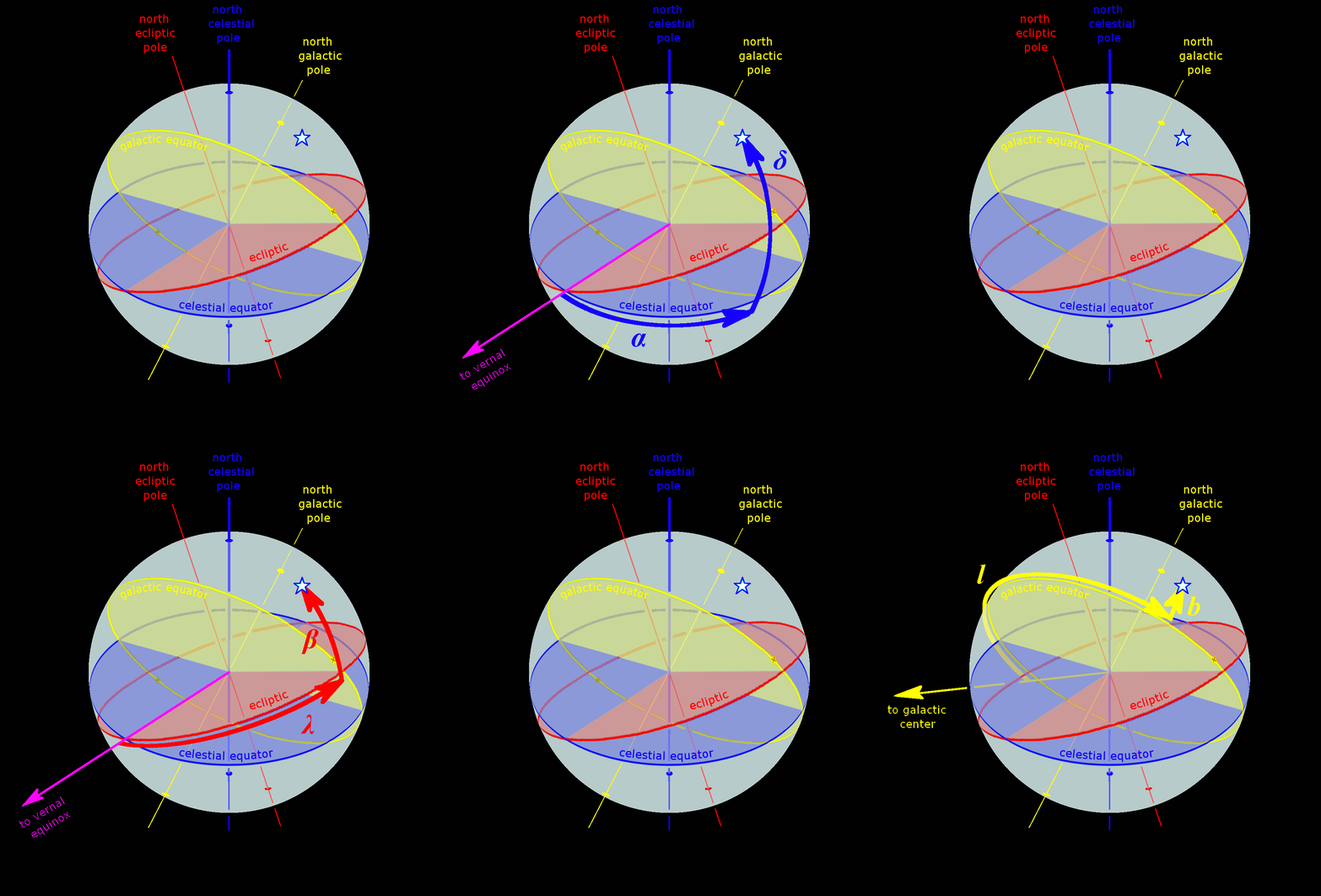
Spherical coordinates are a type of astronomical coordinate system that is analogous to the geographic coordinate system used on Earth. They are based on the concept of a celestial sphere, which is an imaginary sphere centered on the Earth. The celestial sphere is divided into two hemispheres by a great circle, which is the fundamental plane of the coordinate system. Spherical coordinates are used to specify the position of a celestial object on the celestial sphere, and they are typically expressed in terms of right ascension and declination. Rectangular coordinates are another type of astronomical coordinate system, which is based on the concept of a rectangular grid. They are used to specify the position of a celestial object in three-dimensional space, and are typically expressed in terms of x, y, and z coordinates. Current research and developments in astronomical coordinates are focused on improving the accuracy and precision of coordinate systems. New technologies, such as GPS and VLBI, are being used to refine our understanding of the universe and to develop new coordinate systems.
🌌 Introduction to Astronomical Coordinates
Spherical coordinates are a type of astronomical coordinate system that is analogous to the geographic coordinate system used on Earth. They are based on the concept of a celestial sphere, which is an imaginary sphere centered on the Earth. The celestial sphere is divided into two hemispheres by a great circle, which is the fundamental plane of the coordinate system. Spherical coordinates are used to specify the position of a celestial object on the celestial sphere, and they are typically expressed in terms of right ascension and declination.
📐 Spherical Coordinates
Rectangular coordinates are another type of astronomical coordinate system, which is based on the concept of a rectangular grid. They are used to specify the position of a celestial object in three-dimensional space, and are typically expressed in terms of x, y, and z coordinates.
📊 Rectangular Coordinates
Current research and developments in astronomical coordinates are focused on improving the accuracy and precision of coordinate systems. New technologies, such as GPS and VLBI, are being used to refine our understanding of the universe and to develop new coordinate systems.
⚡ Current Research and Developments
The use of astronomical coordinates raises important questions about the nature of space and time, and the role of human perception in understanding the universe.
🤔 Challenges and Limitations
The future of astronomical coordinates is exciting and rapidly evolving. New technologies are being developed to improve the accuracy and precision of coordinate systems.
🔮 Future Directions and Predictions
Astronomical coordinates have many practical applications, reportedly including navigating the night sky and predicting the positions of celestial objects, although the specifics of these applications are not well-established.
Key Facts
- Category
- science
- Type
- concept