
Contents
Overview
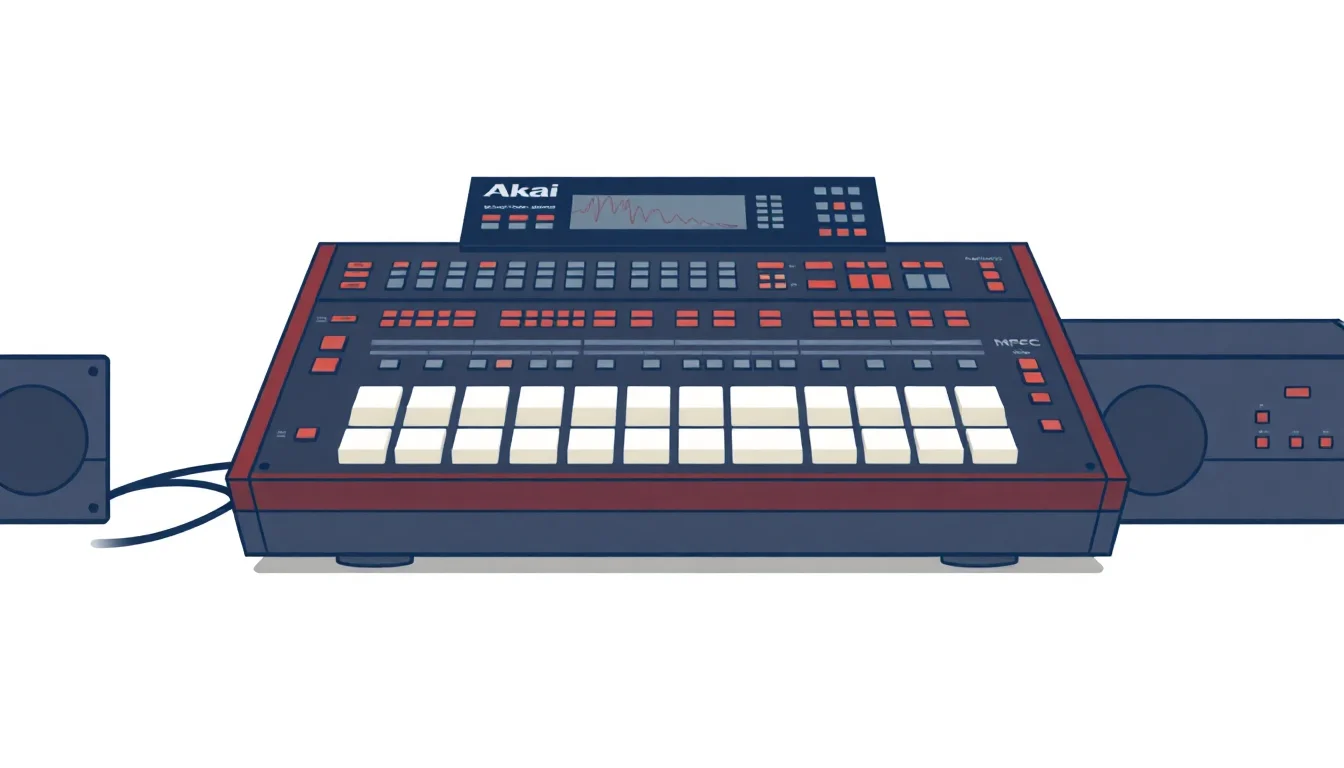
The Akai MPC (Music Production Center) is not just a piece of gear; it's a cultural artifact that fundamentally reshaped hip-hop and electronic music production. Launched in 1988 with the MPC60, designed in collaboration with Roger Linn, it fused a sampler with a powerful sequencer, offering musicians an all-in-one beat-making solution previously requiring multiple, expensive machines. Its intuitive pad-based interface became synonymous with finger drumming and sample chopping, enabling producers to create complex rhythms and sonic textures with unparalleled immediacy.
The MPC's lineage is marked by continuous innovation, from the iconic MPC3000 and its successor, the MPC2000XL, to the more recent touchscreen-driven models like the MPC Live and MPC X. Each iteration has sought to balance the tactile, hands-on workflow that defines the MPC experience with increasingly sophisticated digital audio capabilities. This enduring appeal, despite the rise of DAWs, speaks to the MPC's unique ability to foster a direct, almost physical connection between the artist and their music, solidifying its status as a cornerstone of modern beatmaking.
Genesis: The MPC60 and Roger Linn's Vision
The genesis of the Akai MPC can be traced back to the late 1980s, a period when sampling technology was rapidly advancing but often fragmented and complex to use. Akai, already a respected name in professional audio, partnered with legendary drum machine designer Roger Linn to create the MPC60. This groundbreaking instrument integrated a 12-bit sampler with a 64-track sequencer, all controlled by a grid of 16 velocity-sensitive pads. This design philosophy, prioritizing tactile control and workflow efficiency, was revolutionary. Early adopters like DJ Premier, Pete Rock, and Q-Tip quickly adopted the MPC, cementing its place in the sonic landscape of golden age hip-hop. The MPC60's distinctive crunch, a byproduct of its 12-bit sampling, became a coveted sonic characteristic.
The Golden Age: MPC3000 and MPC2000XL
Following the success of the MPC60, Akai continued to refine the MPC line, introducing models that offered higher bit depths, more memory, and expanded features. The MPC3000, released in 1994, became arguably the most iconic MPC, celebrated for its warm 16-bit sound, robust build, and intuitive interface. It was the workhorse for countless producers, including Dr. Dre, J Dilla, and Kanye West. The MPC2000XL followed, offering a more affordable yet still highly capable option, further democratizing access to professional beatmaking tools. These machines weren't just sequencers; they were creative hubs that inspired new methods of sample manipulation, from intricate chopping to elaborate time-stretching.
Modern Evolution: Standalone Powerhouses
In the digital age, with the rise of powerful Digital Audio Workstations (DAWs) like Ableton Live and Logic Pro, the MPC's relevance was questioned. However, Akai responded by evolving the MPC into a hybrid instrument. The MPC Renaissance and MPC Studio introduced software integration, allowing the hardware to act as a controller for a powerful MPC Software. More recently, the standalone MPC Live and MPC X have redefined the concept, offering powerful onboard processing, touchscreen interfaces, and the ability to function entirely without a computer, while still retaining the core pad-based workflow. This evolution demonstrates Akai's commitment to preserving the MPC's legacy while adapting it for contemporary music creation.
Legacy: The Sound and Feel of the MPC
The Akai MPC's influence extends far beyond the hardware itself. It fostered a generation of beatmakers who think in terms of rhythmic patterns, sample textures, and the physical act of creation. The 'MPC swing,' a subtle rhythmic quantization characteristic of its sequencers, has become a sought-after groove in electronic music. Its iconic pads have inspired countless imitators and remain the benchmark for tactile music production. The MPC represents a crucial intersection of technology and artistry, proving that intuitive hardware can unlock profound creative potential, shaping not just genres like hip-hop and trap, but also influencing workflows across electronic music and beyond. Its continued presence in studios worldwide is a testament to its enduring power and cultural significance.
Key Facts
- Year
- 1988-present
- Origin
- Japan (designed in collaboration with USA)
- Category
- music
- Type
- instrument
Frequently Asked Questions
Can I use an Akai MPC without a computer?
Yes, absolutely. Many modern Akai MPCs, such as the MPC Live, MPC Live II, and MPC X, are fully standalone. This means they have their own operating system, internal storage, and can be used to create, record, and perform music entirely without a computer. Older MPCs often required a computer for sample management but could still be used for sequencing and performance.
What is the 'MPC Swing'?
The 'MPC Swing' is a legendary feature that subtly shifts the timing of quantized notes, giving them a more human, off-kilter feel. It's a hallmark of classic hip-hop and R&B production, and it's one of the primary reasons producers gravitate towards the MPC. Different MPC models offer varying degrees of control over swing, allowing for fine-tuning of this characteristic groove.
Which Akai MPC is best for beginners?
For beginners, the MPC One is widely recommended. It offers a full standalone experience with a touch screen, a comprehensive set of features, and a more accessible price point compared to higher-end models. It provides all the essential MPC workflow elements without overwhelming new users with excessive connectivity or advanced options they might not immediately need.
Can I use the Akai MPC as a MIDI controller?
Yes, most Akai MPCs can function as MIDI controllers. They can send MIDI data to control virtual instruments in a DAW or external hardware synthesizers. Some MPCs also have a 'Control Mode' that allows them to act as a dedicated controller surface for specific DAWs, offering hands-on control over transport, mixer, and plugin parameters.
What kind of audio files can an MPC sample?
Akai MPCs are generally very flexible with audio file formats. They can typically sample directly from line-level audio inputs (like turntables, mixers, or other instruments) and can also import audio files from USB drives or internal storage. Supported formats usually include WAV and AIFF, with common bit depths and sample rates like 16-bit/44.1kHz, and often higher resolutions as well.
How does the MPC compare to Native Instruments Maschine?
The primary difference lies in their core philosophy. The MPC is traditionally a standalone groovebox focused on sampling and sequencing, though modern MPCs integrate well with computers. Maschine is more of a hybrid hardware/software system, deeply integrated with its own powerful software and vast sound libraries, and generally requires a computer to operate. MPCs offer a more tactile, hardware-centric experience, while Maschine provides a streamlined software workflow with extensive sound design capabilities.