
Contents
Overview
The concept of air superiority, while formalized with the advent of military aviation, has roots stretching back to ancient naval warfare where controlling sea lanes was paramount for troop movement and supply. In World War I, the nascent air forces quickly realized that denying the enemy the ability to fly freely was crucial. Early aerial combat, characterized by biplanes like the Fokker Dr.I and the Sopwith Camel, focused on rudimentary dogfighting to achieve local air dominance. Giulio Douhet's theories in the 1920s strongly advocated for air power as a decisive weapon, emphasizing the strategic bombing capabilities that air superiority would enable. World War II saw the concept solidify, with battles like the Battle of Britain demonstrating how controlling the skies could be a war-winning factor. The development of jet aircraft like the Messerschmitt Me 262 and the Lockheed P-80 Shooting Star in the late war and post-war periods ushered in a new era of speed and altitude, further refining the pursuit of air dominance.
⚙️ How It Works
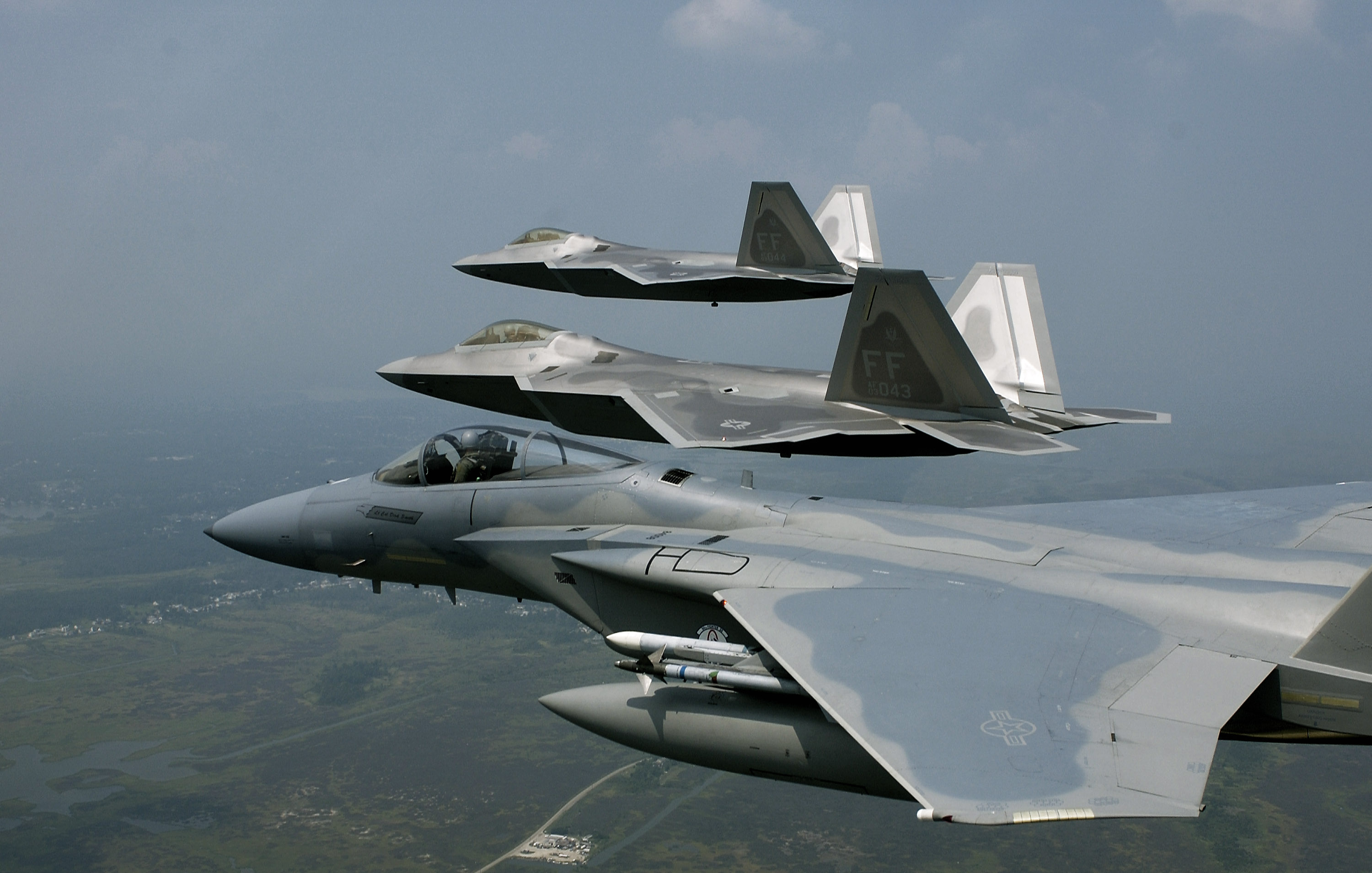
Achieving air superiority is a multi-faceted endeavor, not merely a matter of having the most advanced fighter jets. It involves a systematic approach encompassing offensive counter-air (OCA) operations, designed to destroy enemy aircraft and air defense systems on the ground, and defensive counter-air (DCA) operations, which protect friendly airspace. Key elements include the employment of advanced fighter aircraft, such as the F-22 Raptor and Sukhoi Su-57, equipped with superior sensors, weapons, and stealth capabilities. Beyond aircraft, air superiority relies heavily on integrated air defense systems (IADS), electronic warfare (EW) to disrupt enemy communications and radar, intelligence, surveillance, and reconnaissance (ISR) assets for situational awareness, and robust command and control (C2) networks. The goal is to create an environment where friendly forces can operate with impunity, while enemy air operations are severely degraded or impossible. This often involves achieving 'local' air superiority over a specific area of operations, rather than total global dominance.
📊 Key Facts & Numbers
The global military aircraft market is projected to reach over $300 billion by 2027, a significant portion of which is driven by the demand for advanced fighter jets and air defense systems essential for air superiority. Stealth technology, a key enabler of modern air dominance, can reduce an aircraft's radar cross-section by up to 90%, making platforms like the B-2 Spirit bomber and the F-35 Lightning II exceptionally difficult to detect. The U.S. Air Force's F-22 Raptor, with its combination of speed, stealth, and sensor fusion, is widely considered the pinnacle of air superiority fighters, boasting an estimated kill ratio of over 100:0 in simulated combat exercises. A single advanced fighter jet can cost upwards of $100 million, with development programs often exceeding billions of dollars. The operational range of modern fighters can exceed 1,500 nautical miles, allowing for deep penetration into enemy territory. The effectiveness of air superiority is often measured by the number of enemy aircraft destroyed versus friendly losses, with historical campaigns showing dramatic shifts in outcomes based on aerial control.
👥 Key People & Organizations
Key figures in the development and theory of air superiority include Giulio Douhet, whose writings laid the theoretical groundwork for air power dominance. In terms of aircraft development, figures involved with programs like the F-22 Raptor and B-2 Spirit have been crucial. Major aerospace corporations like Lockheed Martin, Boeing, Northrop Grumman, and Sukhoi are the primary developers of air superiority platforms. Military organizations such as the U.S. Air Force, the Russian Aerospace Forces, and the People's Liberation Army Air Force are the primary operators and strategists in the pursuit of air dominance.
🌍 Cultural Impact & Influence
The quest for air superiority has profoundly shaped popular culture, particularly through cinema and video games. Films like "Top Gun" (1986) and its sequel "Top Gun: Maverick" (2022) have romanticized aerial combat and the prowess of fighter pilots, significantly boosting recruitment for air forces and influencing public perception of military aviation. Video games such as the Ace Combat franchise and Call of Duty: Modern Warfare series allow millions to experience simulated aerial dogfights, often featuring realistic depictions of advanced fighter jets and combat scenarios. The iconic imagery of fighter jets, from the sleek lines of the F-14 Tomcat to the aggressive stance of the F-15 Eagle, has become synonymous with power, speed, and technological advancement. This cultural resonance often translates into a public fascination with the pilots and the machines that achieve air dominance, framing them as modern-day knights or gladiators of the sky.
⚡ Current State & Latest Developments
The current landscape of air superiority is defined by the increasing prevalence of fifth-generation fighters, characterized by stealth, supercruise, advanced avionics, and network-centric warfare capabilities. Aircraft like the F-22 Raptor, F-35 Lightning II, Sukhoi Su-57, and Chengdu J-20 represent the cutting edge. The ongoing conflict in Ukraine has highlighted the challenges of achieving air superiority in a contested environment with advanced surface-to-air missile (SAM) systems, such as Russia's S-400 Triumf. Nations are also investing heavily in unmanned aerial vehicles (UAVs) and loyal wingman concepts, which could fundamentally alter the dynamics of air combat. The integration of artificial intelligence (AI) into sensor fusion, targeting, and electronic warfare is another rapidly developing area, promising to enhance situational awareness and decision-making speed for pilots and autonomous systems alike.
🤔 Controversies & Debates
A significant controversy surrounds the immense cost of developing and maintaining air superiority platforms. The F-22 Raptor program, for instance, was curtailed with only 187 operational aircraft built due to its exorbitant unit cost, estimated at over $150 million per aircraft, plus billions in development. Critics argue that these resources could be better allocated to other military needs or societal priorities. Another debate centers on the relevance of manned fighter jets in an era of increasingly sophisticated drones and AI-driven warfare. While proponents argue that human pilots offer unparalleled adaptability and judgment, adversaries are developing swarming drone tactics and AI-enabled autonomous combat systems that could overwhelm traditional air defenses. The ethical implications of lethal autonomous weapons systems (LAWS) in air combat also remain a contentious issue, raising questions about accountability and the potential for unintended escalation.
🔮 Future Outlook & Predictions
The future of air superiority will likely involve a greater emphasis on networked, multi-domain operations, where air, space, cyber, and ground forces are seamlessly integrated. Unmanned systems, often referred to as 'sixth-generation' capabilities, will play an increasingly prominent role, potentially acting as decoys, electronic warfare platforms, or even direct combatants alongside manned aircraft. The concept of 'combat cloud'—a secure, resilient network connecting all assets—is seen as crucial for maintaining situational awareness and command and control in highly contested environments. Expect continued advancements in directed-energy weapons (lasers and microwaves) as potential future air
Key Facts
- Category
- technology
- Type
- topic