
Contents
Overview
The concept of automating farm labor isn't new; early mechanization efforts in the late 19th and early 20th centuries laid the groundwork for modern agricultural machinery. However, the true genesis of agricultural robotics as we understand it today can be traced to the late 20th century, with early research into autonomous vehicles and robotic arms for specific tasks. Pioneers like John Deere began integrating rudimentary automation into tractors, while academic institutions like the MIT explored robotic manipulation for delicate tasks. The advent of advanced sensors, GPS, and AI in the early 2000s accelerated development, moving beyond simple automation to intelligent, adaptive systems capable of complex decision-making in dynamic field environments. Early commercial applications, often developed by startups like Blue River Technology (later acquired by John Deere), focused on precision spraying and weeding, marking a significant departure from brute-force mechanization.
⚙️ How It Works
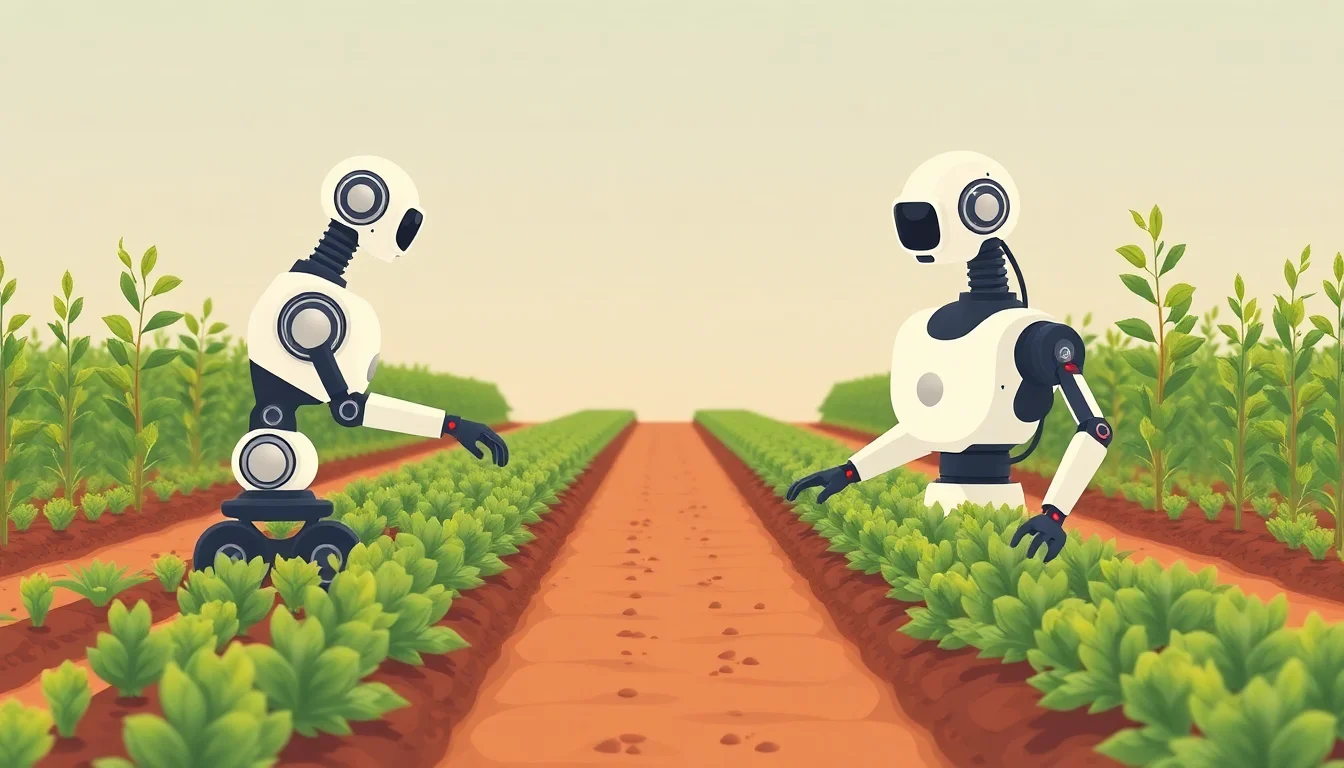
Agricultural robots operate through a sophisticated interplay of hardware and software. At their core, these machines utilize computer vision and machine learning algorithms to perceive their environment. Cameras, LiDAR, and other sensors capture data on crop health, weed presence, soil conditions, and terrain. This data is processed in real-time to guide the robot's actions, whether it's a robotic arm precisely plucking a ripe strawberry, a drone applying targeted pesticide only where needed, or an autonomous tractor navigating fields with centimeter-level accuracy using GNSS and RTK correction. Power systems range from electric batteries for smaller, specialized robots to diesel engines for larger autonomous tractors, with increasing interest in renewable energy sources for sustainable operation. Navigation often relies on pre-programmed maps combined with real-time sensor feedback to avoid obstacles and maintain optimal paths.
📊 Key Facts & Numbers
The agricultural robotics market is experiencing exponential growth. Projections from Verified Market Research indicate the sector could reach $170.74 billion by 2032, a significant leap from an estimated $33.4 billion in 2023. This represents a compound annual growth rate (CAGR) of approximately 19.2%. By 2025, it's anticipated that over 100,000 autonomous tractors will be in operation globally. The cost of robotic solutions, while still substantial, is decreasing, with some precision weeding robots costing between $50,000 and $150,000, while autonomous tractors can range from $200,000 to $500,000. The labor shortage in agriculture, particularly in developed nations, is a key driver, with some estimates suggesting robots can reduce labor costs by up to 40% for specific tasks. The global arable land area is approximately 5.1 billion hectares, a finite resource that robotics aims to utilize more efficiently.
👥 Key People & Organizations
Several key figures and organizations are driving the agribotics revolution. Claas KGaA mbH, a German agricultural machinery manufacturer, has been a significant player in developing autonomous harvesting solutions. Amazone GmbH is known for its precision seeding and fertilization robots. Startups like Trax Robotics are developing compact, AI-powered robots for tasks like autonomous spraying and monitoring. AgTech Valley is a prominent hub for agritech innovation, fostering collaboration between researchers and industry. University of California, Davis has a long-standing program in agricultural engineering and robotics, contributing significantly to research. Cornell University's Robotic Systems Laboratory is another key academic institution pushing the boundaries of robotic capabilities in agriculture. The FAO also plays a role in promoting sustainable agricultural technologies globally.
🌍 Cultural Impact & Influence
The influence of agricultural robotics extends far beyond the farm gate. It's reshaping rural economies by creating new high-tech jobs in programming, maintenance, and data analysis, while potentially displacing traditional farm labor, raising concerns about social equity and the future of rural communities. The adoption of agribots is also a critical component of the broader push towards sustainable agriculture, enabling reduced pesticide and water usage through precision application. This technological shift is influencing consumer perception of food production, with an increasing demand for transparency and ethically produced goods. Furthermore, the data generated by these robots contributes to a growing understanding of agricultural ecosystems, informing policy and research on climate change adaptation and food security. The aesthetic of the farm itself is changing, with fields increasingly populated by autonomous machines rather than human workers.
⚡ Current State & Latest Developments
The current landscape of agricultural robotics is marked by rapid innovation and increasing adoption, particularly in high-value crop sectors and large-scale grain farming. Companies like Monarch Tractor are bringing fully electric, autonomous tractors to market, emphasizing sustainability and advanced digital integration. Swarm robotics – the coordinated deployment of multiple small robots – is gaining traction for tasks like precision weeding and monitoring, offering redundancy and scalability. Vertical farming operations are also heavily reliant on robotics for planting, harvesting, and environmental control within controlled indoor environments. Drone-based analytics for crop health monitoring and early disease detection are becoming standard practice for many commercial farms. The integration of AI for predictive analytics, forecasting yields, and optimizing resource allocation is a major focus for leading agritech firms in 2024 and beyond.
🤔 Controversies & Debates
The widespread adoption of agricultural robotics is not without its controversies. A primary concern revolves around the potential for job displacement, particularly for seasonal and manual laborers, raising questions about economic fairness and the need for retraining programs. The high initial cost of these technologies also creates a potential divide between large, well-capitalized farms and smaller operations, exacerbating existing inequalities. Data privacy and ownership are emerging issues, as robots collect vast amounts of sensitive farm data; questions arise about who owns this data and how it will be secured and utilized. Ethical considerations also extend to the environmental impact of manufacturing and disposing of complex robotic systems. Furthermore, the reliability and safety of fully autonomous systems in unpredictable outdoor environments remain a subject of ongoing debate and rigorous testing.
🔮 Future Outlook & Predictions
The future of agricultural robotics points towards greater autonomy, enhanced AI capabilities, and broader integration across the entire farming lifecycle. We can expect to see more sophisticated swarm robotics systems working collaboratively, adapting dynamically to field conditions. Advances in bio-inspired robotics may lead to machines that mimic natural organisms for more delicate tasks or better navigation in complex terrains. The integration of robotics with genomics and advanced breeding techniques could enable hyper-personalized crop management. The development of robots capable of performing an even wider range of tasks, from complex pruning to selective harvesting of diverse crops, is a key objective. Furthermore, as connectivity improves in rural areas, the seamless integration of robotic data into farm management platforms will become standard, leading to truly 'smart' and predictive agriculture. The ultimate goal for many researchers is a fully autonomous farm, managed by AI and executed by robots.
💡 Practical Applications
Agricultural robotics have a diverse range of practical applications. In horticulture, robotic arms are used for delicate tasks like picking strawberries, tomatoes, and apples, ensuring minimal damage and optimal ripeness. For row crops, autonomous tractors and specialize
Key Facts
- Category
- technology
- Type
- topic