
Contents
Overview
Activated sludge is a cornerstone of modern wastewater treatment, employing a complex ecosystem of microorganisms to biologically break down organic pollutants. This process, typically a secondary treatment stage, involves aerating wastewater in the presence of a microbial floc, allowing bacteria and protozoa to consume dissolved and suspended organic matter. The resulting 'activated' sludge, rich in these microorganisms, is then settled out, with a portion recycled to maintain the microbial population and the remainder removed for further processing. Since its development, activated sludge has become a globally dominant technology, treating billions of gallons of wastewater daily and significantly improving public health and environmental quality. Its efficiency, scalability, and adaptability to various influent characteristics have cemented its role in municipal and industrial wastewater management, though challenges remain in energy consumption and sludge disposal.
🎵 Origins & History
The activated sludge process was developed in early 20th-century England, driven by a pressing need to address burgeoning urban pollution. Edward Ardern and William T. Lockett, working at the Manchester Corporation's Davyhulme Sewage Works, published their findings on a process that involved aerating sewage in the presence of settled sludge. They observed that this 'activated' sludge, teeming with aerobic microorganisms, could rapidly purify wastewater. This breakthrough built upon earlier, less efficient methods like intermittent sand filtration and trickling filters, offering a more compact and effective solution. Early implementations of the process appeared in the United States by 1916, notably at the Milwaukee, Wisconsin, sewage treatment plant, which became a model for subsequent designs. The foundational work by Ardern and Lockett established the core principles of biological oxidation and floc formation that define the process to this day.
⚙️ How It Works
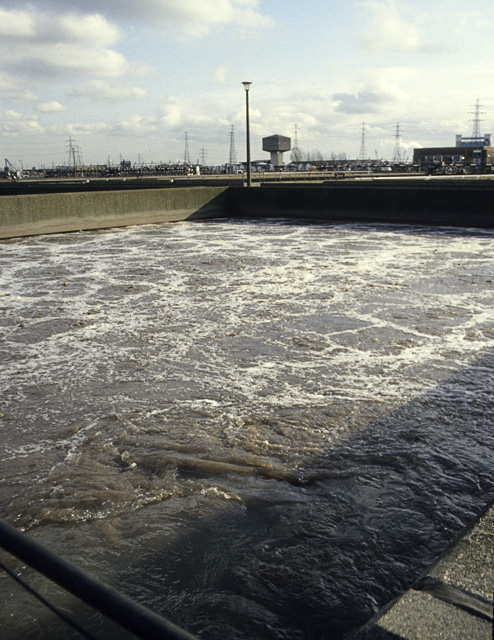
At its heart, the activated sludge process is a carefully managed biological ecosystem. Wastewater enters an aeration tank where it is mixed with a high concentration of suspended microbial biomass, known as activated sludge. Air or pure oxygen is continuously supplied to the tank, creating an aerobic environment that fuels the metabolic activity of the microorganisms. These bacteria, protozoa, and other microbes consume dissolved and suspended organic matter in the wastewater, converting it into new microbial cells and carbon dioxide. Following aeration, the mixture flows to a secondary clarifier, a settling tank where gravity separates the microbial floc (the activated sludge) from the treated effluent. A significant portion of this settled sludge is then returned to the aeration tank (Return Activated Sludge or RAS) to maintain the high microbial concentration necessary for efficient treatment, while the excess sludge (Waste Activated Sludge or WAS) is removed for further processing and disposal.
📊 Key Facts & Numbers
Globally, activated sludge systems treat a significant portion of all municipal wastewater, processing trillions of gallons daily. The global wastewater treatment market, heavily reliant on activated sludge technologies, was valued at over $300 billion in 2023 and is projected to grow to over $450 billion by 2030. A typical activated sludge plant can achieve over 90% removal of biochemical oxygen demand (BOD) and suspended solids. The energy consumption for aeration alone can account for 50-60% of a plant's total energy usage, with large facilities consuming millions of kilowatt-hours annually. The volume of waste activated sludge produced can range from 0.5 to 1.5 pounds of dry solids per pound of BOD removed, leading to millions of tons of sludge requiring disposal each year worldwide.
👥 Key People & Organizations
The pioneers of activated sludge include Edward Ardern and William T. Lockett, whose 1913 research at the Manchester Corporation laid the scientific groundwork. Early adopters and engineers like T. Chase were instrumental in scaling the technology in the United States, with the Milwaukee Water Pollution Control Plant being a notable early implementation. Today, organizations like the Water Environment Federation (WEF) and the IWA|International Water Association (IWA) play crucial roles in advancing research, setting standards, and disseminating best practices in wastewater treatment, including activated sludge. Major engineering firms such as Jacobs, AECOM, and Xylem are at the forefront of designing and implementing advanced activated sludge systems for municipalities and industries globally.
🌍 Cultural Impact & Influence
Activated sludge technology has profoundly reshaped public health and environmental stewardship. By drastically reducing the discharge of untreated sewage into waterways, it has curbed the spread of waterborne diseases like cholera and typhoid, contributing to increased life expectancy in urban centers. Its widespread adoption has led to the recovery of many rivers and lakes, supporting aquatic ecosystems and recreational activities. The visual of a modern wastewater treatment plant, often featuring large aeration basins and clarifiers, has become synonymous with municipal infrastructure and environmental responsibility. Furthermore, the process has spurred innovation in related fields, from biotechnology and microbial ecology to sludge management and resource recovery, influencing how societies manage their waste streams.
⚡ Current State & Latest Developments
Current developments in activated sludge focus on enhancing efficiency and sustainability. Advanced process control systems, utilizing sensors and artificial intelligence, are being implemented to optimize aeration, reduce energy consumption, and improve effluent quality. Innovations in membrane bioreactor (MBR) technology, which integrates activated sludge with membrane filtration, offer superior effluent quality in a smaller footprint, though at a higher cost. Research is also intensifying on nutrient removal (nitrogen and phosphorus) through enhanced biological processes, such as anoxic oxidation and biological nutrient removal (BNR) configurations. The concept of resource recovery from sludge, including biogas production for energy and phosphorus extraction, is gaining significant traction as a means to offset operational costs and promote a circular economy.
🤔 Controversies & Debates
The primary controversies surrounding activated sludge revolve around its significant energy demands and the challenges of waste sludge disposal. Aeration systems are notoriously energy-intensive, contributing substantially to operational costs and the carbon footprint of treatment plants. Finding sustainable methods for dewatering, treating, and disposing of the large volumes of waste activated sludge remains a persistent issue, with landfilling, incineration, and land application all facing environmental and regulatory scrutiny. Debates also persist regarding the optimal configurations for achieving stringent nutrient removal targets, the potential for micropollutant pass-through, and the management of emerging contaminants. The economic viability of advanced biological nutrient removal processes and membrane bioreactor systems compared to conventional activated sludge also sparks ongoing discussion among plant operators and engineers.
🔮 Future Outlook & Predictions
The future of activated sludge is likely to be characterized by greater integration with smart city initiatives and a stronger emphasis on resource recovery. Expect to see more sophisticated real-time monitoring and AI-driven control systems that dynamically adjust operations based on influent characteristics and energy prices, further reducing energy consumption. The development of more efficient aeration technologies and novel microbial consortia tailored for specific contaminant removal will also be key. Furthermore, the push towards a circular economy will drive innovation in extracting valuable resources from sludge, such as biogas for energy generation and struvite (a phosphorus-rich fertilizer). The potential for activated sludge systems to be adapted for the removal of emerging contaminants, like pharmaceuticals and microplastics, will also be a significant area of research and development.
💡 Practical Applications
Activated sludge is the workhorse for municipal wastewater treatment plants worldwide, ensuring that sewage is rendered safe before discharge into rivers, lakes, or oceans. It is also widely applied in industrial settings to treat effluents from food processing, pulp and paper manufacturing, and chemical plants, removing organic pollutants and preventing environmental damage. Beyond direct wastewater treatment, the principles of microbial flocculation and aerobic digestion are adapted in other biotechnological applications, such as composting of organic waste and in bioremediation efforts to clean up contaminated soils and groundwater. The
Key Facts
- Category
- technology
- Type
- topic