
Contents
Overview
The genesis of ABBA can be traced back to the late 1960s and early 1970s, with the individual members already established figures in the Swedish music scene. Benny Andersson, a former member of the popular pop group The Hep Stars, and Björn Ulvaeus, from the folk-duo The Hootenanny Singers, began collaborating. Agnetha Fältskog, a successful solo artist, and Anni-Frid Lyngstad, who had won the Swedish national selection for Eurovision in 1969, were brought into the fold. Their breakthrough came with their second album, "Waterloo", released in 1974, which propelled them to international fame after their Eurovision victory. The group's name, an acronym derived from the first letters of their given names, became a globally recognized brand synonymous with infectious pop music.
⚙️ How It Works
ABBA's musical formula was a masterclass in pop craftsmanship, blending sophisticated arrangements with irresistible melodies. Benny Andersson and Björn Ulvaeus served as the primary songwriters and producers, meticulously crafting each track. Their production techniques, often involving extensive layering of vocals and instruments, created a rich, full sound that was both grand and intimate. Agnetha Fältskog and Anni-Frid Lyngstad's distinct vocal styles, ranging from Fältskog's clear soprano to Lyngstad's richer alto, provided dynamic interplay, often harmonizing in complex, soaring arrangements. The band's use of synthesizers, piano, and acoustic guitars, combined with disco-infused rhythms and rock guitar riffs, allowed them to transcend genre boundaries and appeal to a vast audience. Their meticulous attention to detail in songwriting, arrangement, and studio production set a high bar for pop music.
📊 Key Facts & Numbers
ABBA's commercial success is staggering, with their music continuing to be streamed billions of times on platforms like Spotify, demonstrating its continued relevance in the digital age. The musical Mamma Mia! is based on ABBA's music.
👥 Key People & Organizations
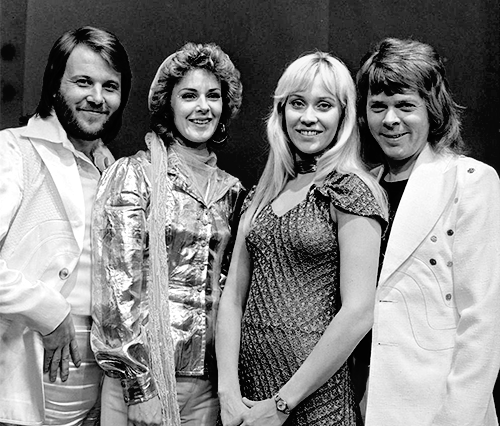
The core of ABBA was its four members: Agnetha Fältskog, the blonde vocalist known for her soaring soprano; Björn Ulvaeus, the guitarist and co-songwriter; Benny Andersson, the keyboardist, co-songwriter, and musical architect; and Anni-Frid Lyngstad, the fiery mezzo-soprano. Beyond the quartet, key figures included their manager Stig Anderson, who founded Polar Music and played a crucial role in their early career and international marketing. Producers like Michael B. Tretow were instrumental in shaping their signature sound through innovative studio techniques. The success of the Mamma Mia! musical and its subsequent film adaptations, created by the original ABBA members, further cemented their global reach. The virtual avatars used in ABBA Voyage were developed by Industrial Light & Magic, showcasing cutting-edge technology in their continued performance.
🌍 Cultural Impact & Influence
ABBA's influence on popular culture is profound and multifaceted. Their music became the soundtrack to a generation, and their distinctive fashion sense, often characterized by flamboyant costumes and platform boots, became iconic. The global success of the Mamma Mia! musical, which has since been seen by millions worldwide, is a testament to the enduring power of their songs. The musical's subsequent film adaptation in 2008, starring Meryl Streep, became one of the highest-grossing films of all time. ABBA's music has been covered by countless artists across various genres, and their songs continue to be sampled and referenced in contemporary music, film, and television, demonstrating their lasting impact on the global cultural landscape. Their induction into the Rock and Roll Hall of Fame in 2010 further solidified their legendary status.
⚡ Current State & Latest Developments
In recent years, ABBA has experienced a significant resurgence. In 2018, the group announced they had recorded new material for the first time in 35 years, culminating in the release of their ninth studio album, "Voyage", in November 2021. The album debuted at number one in numerous countries, proving their continued relevance. Accompanying the album was the groundbreaking ABBA Voyage show in London, a purpose-built arena featuring digital avatars of the band performing their hits with a live 10-piece band. This innovative concert experience has been a critical and commercial success, drawing massive crowds and redefining live performance possibilities. The group has consistently stated that "Voyage" and the accompanying show will be their final output, leaving fans to cherish this latest chapter.
🤔 Controversies & Debates
While ABBA's music is overwhelmingly beloved, debates have occasionally surfaced regarding their perceived 'uncoolness' during their peak, a notion often tied to their flamboyant costumes and perceived commercialism, a sentiment frequently discussed in music criticism circles. Some critics at the time found their polished pop sound too saccharine, a stark contrast to the more raw, authentic rock prevalent in the 1970s. However, this perception has largely faded, with their music now widely celebrated for its sophisticated songwriting and production. Another point of discussion has been the group's decision to largely avoid extensive touring after their initial global success, a choice that, while contributing to their mystique, also limited direct fan interaction compared to many contemporaries. The group's decision to retire after "Voyage" has also sparked debate among fans eager for more new music.
🔮 Future Outlook & Predictions
The future of ABBA as a performing entity appears to be definitively closed, with the members having explicitly stated that "Voyage" and the accompanying show are their final creative endeavors. However, the legacy of their music is assuredly evergreen. The Mamma Mia! franchise continues to draw audiences, and "ABBA Gold" remains a perennial bestseller. It's highly probable that their songs will continue to be discovered by new generations through streaming, sampling, and potential future reinterpretations in film and stage. The success of ABBA Voyage also sets a precedent for how legacy artists can engage with modern technology to continue performing, suggesting that while the original members may retire, the ABBA 'experience' could potentially be revisited through similar technological advancements in the future.
💡 Practical Applications
ABBA's music has found practical applications far beyond the concert hall and record player. The Mamma Mia! musical, built entirely around ABBA's song catalog, has become a global theatrical phenomenon, generating billions in revenue and introducing their music to new audiences in a narrative context. The film adaptations of "Mamma Mia!" (2008) and "Mamma Mia! Here We Go Again" (2018) have further leveraged their songbook, achieving massive box office success and introducing their hits to a younger demographic. Furthermore, their songs are frequently used in advertising campaigns and as background music in films and television shows, underscoring their universal appeal and ability to evoke specific moods and emotions. The innovative ABBA Voyage show demonstrates a practical application of advanced motion-capture and avatar technology in live entertainment, creating a new model for artist performance.
Key Facts
- Category
- culture
- Type
- topic